220 Volt Wire Size Calculator
220 Volt Wire Size Calculator
Calculate recommended AWG wire size for 220V AC systems based on current, length, and max voltage drop. Formula: Max R (Ω/1000ft) = (VD% / 100 * 220 * 1000) / (2 * L * I). Select smallest AWG where R ≤ Max R (copper wire at 75°C).
220 Volt Wire Size Calculator: Accurate Wire Selection for Safe Electrical Systems
Choosing the right wire size for a 220V electrical system is critical to ensure safety, efficiency, and compliance with electrical codes. A 220 Volt Wire Size Calculator simplifies this process by calculating the appropriate wire gauge based on current, wire length, and allowable voltage drop. Whether you are installing appliances, HVAC systems, or industrial machinery, selecting the correct wire prevents overheating, reduces energy loss, and avoids costly repairs.
This guide explores everything you need to know about 220V wire sizing, including practical examples, expert insights, and formulas to calculate voltage drop and resistance. Additionally, we provide internal references to other helpful electrical and physics calculators for deeper understanding, such as the 24V Wire Size Calculator and G-Force Calculator.
Why a 220 Volt Wire Size Calculator Is Essential
Proper wire sizing is more than just following charts. Incorrect wire selection can cause:
-
Excessive voltage drop leading to equipment malfunction
-
Overheating wires and potential fire hazards
-
Inefficient energy consumption and increased utility bills
-
Failure to meet National Electrical Code (NEC) standards
Using a 220V Electrical Wire Gauge Calculator allows electricians, DIY enthusiasts, and engineers to determine the smallest safe wire that meets both current capacity and voltage drop requirements. It considers:
-
Current (Amps) – the amount of electrical flow through the wire
-
Wire length (feet or meters) – longer distances require thicker wires
-
Maximum voltage drop (%) – ensures devices receive sufficient voltage for proper operation
Expert electricians often rely on these calculators in combination with their knowledge of ampacity charts, real-world conditions, and safety margins to select wire sizes.
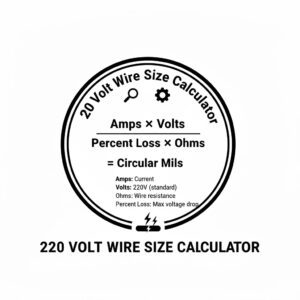
Understanding the Formulas Behind Wire Sizing
A 220V Current to Wire Gauge Calculator uses a simple but effective formula derived from Ohm’s Law and voltage drop principles:
-
Maximum allowable voltage drop:
Allowable VD (V) = (VD% / 100) × 220 -
Maximum wire resistance per 1000 ft:
Max R (Ω/1000ft) = (Allowable VD × 1000) / (2 × L × I) -
Actual voltage drop for selected wire:
Actual VD (V) = (2 × L × I × R) / 1000 -
Actual voltage drop percentage:
Actual VD% = (Actual VD / 220) × 100
Where:
-
Lis the one-way wire length -
Iis the current in amperes -
Ris the wire resistance per 1000 ft
These calculations ensure that the selected wire meets safety standards while minimizing energy loss.
How to Use a Wire Size Calculator for 220 Volt Circuit
Using a 220V Ampacity to Wire Size Calculator is straightforward:
-
Enter the current that the wire will carry.
-
Specify the one-way length of the wire.
-
Input the maximum allowable voltage drop (usually 3% for critical appliances).
-
Click calculate to get the recommended AWG wire size, resistance, and expected voltage drop.
Modern calculators often provide:
-
Metric cards for current, length, and voltage drop
-
Recommended AWG wire
-
Actual voltage drop percentage
-
Safety tips and ampacity notes
Automated calculators reduce human errors and save hours of manual computation.
Practical Example: Residential Wiring
Imagine installing a 220V water heater that requires 30A over a 50-foot run. Using the formulas above:
-
Allowable VD:
(3 / 100) × 220 = 6.6 V -
Max resistance per 1000 ft:
(6.6 × 1000) / (2 × 50 × 30) = 2.2 Ω/1000ft
By consulting AWG resistance charts or a 220V Electrical Wire Gauge Calculator, the correct wire size might be AWG 10, ensuring the voltage drop remains within limits.
This approach ensures the heater operates efficiently without overheating the wiring or creating fire hazards.
Industrial Applications
In commercial or industrial settings, current requirements are higher, and distances can exceed hundreds of feet. For example:
-
A 220V motor drawing 75A over a 200-foot distance
-
Maximum voltage drop allowed: 3%
Using a Wire Size Calculator for 220 Volt Circuit, the formula calculates Max R and identifies a 6 AWG wire or larger to maintain safe voltage levels.
Industry experts recommend adding a safety margin of 10-20% in resistance to account for environmental factors like temperature, insulation type, and ambient heat.
Key Factors Affecting Wire Size Selection
When determining wire gauge, consider the following:
-
Ampacity: Maximum current a wire can safely carry without overheating
-
Voltage drop: Longer runs require thicker wire
-
Wire material: Copper is more conductive than aluminum
-
Ambient temperature: High temperatures reduce ampacity
-
Installation type: Conduits, trays, or free air affect heat dissipation
A 220V Current to Wire Gauge Calculator incorporates these considerations to provide accurate results while aligning with NEC recommendations.
Advantages of Using a 220 Volt Wire Size Calculator
-
Accuracy: Eliminates guesswork by computing exact resistance and voltage drop.
-
Time-saving: Reduces manual chart consultation.
-
Safety: Prevents overheating and potential fire hazards.
-
Efficiency: Minimizes energy loss in the system.
-
Expert guidance: Provides practical tips and warnings based on calculated results.
For those frequently handling multiple voltage systems, combining this with a 24V Wire Size Calculator helps compare wire selection across low-voltage DC and standard AC systems.
Real Case Study: Home Renovation
A homeowner upgrading their kitchen to support a 220V oven and induction cooktop faced wire sizing challenges:
-
Oven: 40A over 35 feet
-
Cooktop: 30A over 25 feet
-
Max voltage drop allowed: 3%
Using a 220 Volt Wire Size Calculator, the electrician determined:
-
Oven: AWG 6 copper wire
-
Cooktop: AWG 8 copper wire
After installation, the voltage drop was measured and found well below 3%, ensuring efficient operation. The calculator also suggested safety tips like verifying breaker rating and insulation type.
Expert Experiences
Electricians highlight that calculators do not replace professional judgment. Experts recommend:
-
Always consider environmental factors like heat, humidity, and bundling of wires.
-
Cross-check calculated AWG with NEC ampacity charts.
-
For long industrial runs, consider voltage drop limit stricter than 3% for sensitive equipment.
Engineers often combine the calculator’s results with physics calculators for advanced simulations and performance validation.
Step-by-Step Guide for Accurate Results
To get the most accurate results:
-
Measure exact one-way length of the wire.
-
Determine maximum load current.
-
Choose voltage drop percentage (1-5% for critical appliances, 3% typical).
-
Use the 220 Volt Wire Size Calculator to find AWG.
-
Verify against ampacity tables for continuous load limits.
-
Add safety margin if environmental conditions demand it.
Following these steps ensures compliance, efficiency, and long-term reliability.
Common Mistakes to Avoid
-
Choosing wire based solely on current without considering voltage drop.
-
Ignoring temperature correction factors for high-ambient environments.
-
Using aluminum wires without consulting derating tables.
-
Assuming maximum allowed voltage drop is acceptable for sensitive devices.
A 220V Electrical Wire Gauge Calculator eliminates these errors by combining current, length, and voltage drop into one calculation.
Benefits of Integrating Calculators into Daily Work
Using online tools like a 220V Ampacity to Wire Size Calculator or a G-Force Calculator offers:
-
Faster project planning and budgeting
-
Reduced human error in complex multi-circuit systems
-
Reliable documentation for client proposals and inspections
-
Continuous learning and reference for engineers and electricians
FAQs
Q1: Can I use the same wire size calculator for 110V circuits?
Yes, but you must adjust the formulas for the voltage. Voltage drop calculations depend on the system voltage, so use a calculator designed for 110V or modify the voltage value in the formula.
Q2: How do I choose maximum voltage drop percentage?
For critical appliances like ovens and motors, use 2-3%. For lighting circuits, up to 5% is generally acceptable. Lower percentages are safer for sensitive electronics.
Q3: Is copper always better than aluminum for 220V wires?
Copper is more conductive and safer at higher currents, but aluminum can be used if derating factors and installation guidelines are followed. Consult NEC tables for precise ampacity.
Conclusion
A 220 Volt Wire Size Calculator is an essential tool for electricians, engineers, and DIY enthusiasts seeking safe, efficient, and code-compliant wiring solutions. By combining current, wire length, and allowable voltage drop, it provides precise AWG recommendations and practical advice. Real-life applications—from residential ovens to industrial motors—demonstrate the calculator’s value in preventing voltage drop, energy loss, and potential fire hazards.
Using these calculators alongside expert judgment, ampacity charts, and professional guidelines ensures your electrical systems perform reliably and safely. For more electrical and physics calculations, explore resources like physics calculators and specialized tools like 24V Wire Size Calculator.