Carbon Sequestration Calculator
Carbon Sequestration Calculator
Estimate annual carbon sequestration from trees, soil practices, or other natural methods based on global scientific averages.
Carbon Sequestration Calculator: Measure Your Environmental Impact
Understanding how much carbon dioxide (CO₂) your activities contribute—or how much nature can absorb—is more important than ever. The Carbon Sequestration Calculator is a practical tool designed to help individuals, organizations, and environmental enthusiasts estimate annual carbon sequestration from forests, mangroves, grasslands, soil amendments, and other natural solutions. Whether you are planting trees, restoring wetlands, or experimenting with biochar, this calculator provides realistic, science-backed estimates of how much CO₂ can be captured from the atmosphere.
Imagine you manage a community reforestation project and want to quantify your impact for a grant application. By inputting the number of trees or the area restored into this tool, you immediately see the potential CO₂ sequestration and equivalent environmental benefits, making your project outcomes measurable and actionable.
How the Carbon Sequestration Calculator Works
This calculator is built on global averages from scientific research, including data from IPCC reports, FAO studies, and peer-reviewed environmental research. Here’s a breakdown of how it operates:
-
Select Sequestration Method: Choose from options like:
-
Tree planting (new forests)
-
Existing mature forests
-
Mangrove restoration
-
Grassland or pasture management
-
Cover cropping for agriculture
-
Biochar soil amendment
-
Wetland/peatland restoration
-
-
Input Quantity or Area:
-
Enter hectares, acres, number of trees, or tons of biochar depending on the method.
-
-
Calculation Logic:
-
The calculator multiplies your input by an annual sequestration factor in metric tons CO₂e per unit. For example:
-
Tree planting:
CO2 Sequestered = Number of Trees × 0.022(metric tons/year) -
Mangrove restoration:
CO2 Sequestered = Hectares × 15(metric tons/year) -
Biochar application:
CO2 Sequestered = Tons of Biochar × 2.5(metric tons/year)
-
-
-
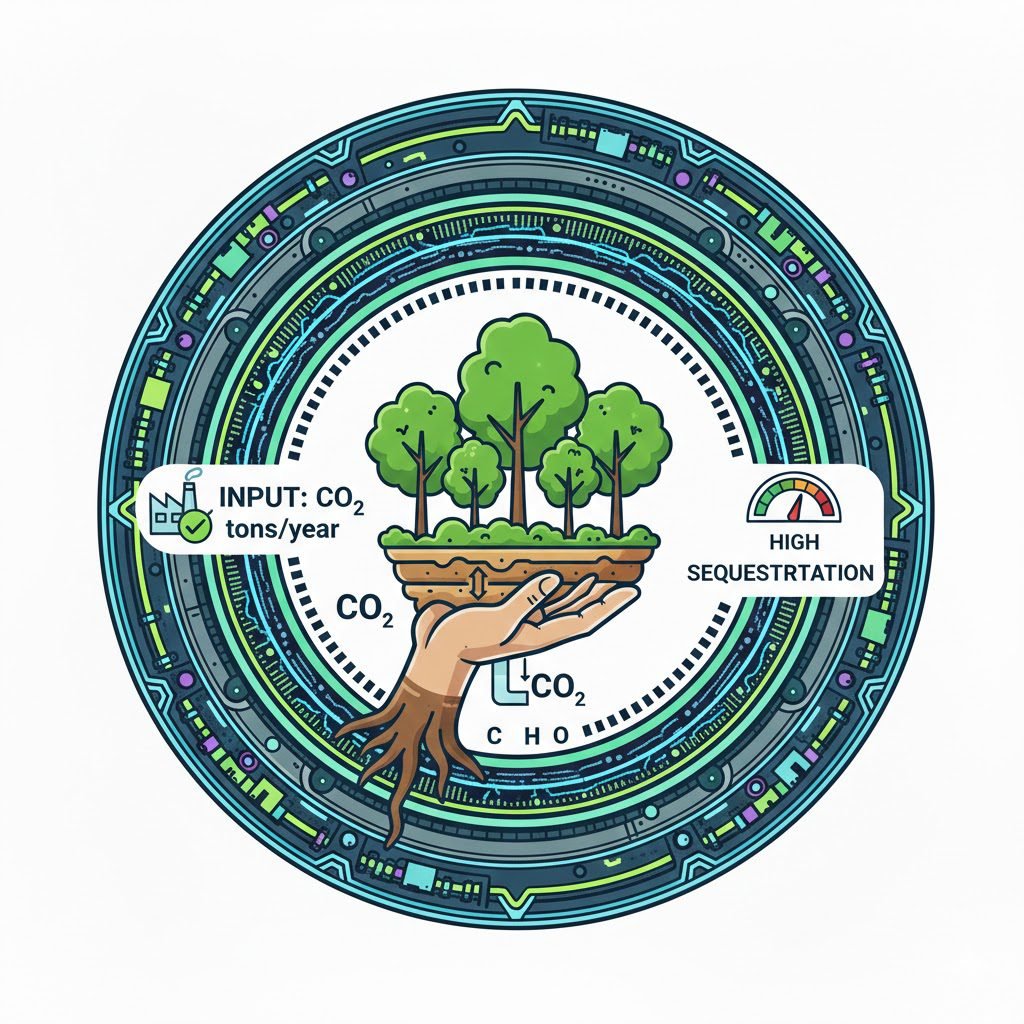
Outputs:
-
Estimated annual CO₂ sequestration
-
Sequestration potential (Low, Moderate, High)
-
Equivalent number of cars removed from the road
-
Practical advice on maximizing carbon capture through nature-based solutions
-
Why Carbon Sequestration Matters
Carbon sequestration is the process of capturing atmospheric CO₂ and storing it in plants, soils, or water bodies. It is crucial because:
-
Forests and mangroves absorb carbon that would otherwise remain in the atmosphere, contributing to global warming.
-
Biochar and cover crops improve soil health while sequestering carbon.
-
Wetlands and peatlands are highly efficient carbon sinks, capturing carbon for centuries.
Key Benefits of Measuring Sequestration:
-
Quantifies environmental impact for individuals or organizations
-
Supports climate action plans and sustainability reporting
-
Helps policymakers prioritize high-impact interventions
-
Provides educational insight into how ecosystems combat climate change
Step-by-Step Examples
Here are practical scenarios to illustrate the calculator’s use:
Example 1: Tree Planting for a Community Park
-
Method: Tree Planting (New Forest)
-
Quantity: 500 trees
-
Calculation:
500 × 0.022 = 11 metric tons CO₂/year -
Equivalent: ~2 cars removed per year
Insight: Even small urban projects can measurably reduce CO₂ emissions while enhancing local biodiversity.
Example 2: Mangrove Restoration
-
Method: Mangrove Restoration
-
Area: 3 hectares
-
Calculation:
3 × 15 = 45 metric tons CO₂/year -
Equivalent: ~10 cars removed per year
Insight: Mangroves capture significantly more CO₂ per hectare than most terrestrial forests, making coastal restoration highly effective.
Example 3: Biochar Soil Amendment
-
Method: Biochar
-
Quantity: 10 metric tons
-
Calculation:
10 × 2.5 = 25 metric tons CO₂/year -
Equivalent: ~5 cars removed per year
Insight: Biochar offers long-term carbon storage, improving soil fertility while mitigating climate change.
Practical Tips for Accurate Results
-
Always use realistic input values—avoid overestimating tree density or area coverage.
-
Consider local climate and soil conditions, as actual sequestration rates may vary.
-
Combine multiple methods (e.g., tree planting + cover crops) to maximize carbon capture.
-
Use results for educational projects, corporate sustainability reports, or environmental impact studies.
Related Tools to Explore
-
Fossil Fuel Energy Loss Calculator – measure inefficiencies in energy use
-
Methane Emission from Livestock Calculator – track livestock methane output
-
Chemical Spill Risk Calculator – estimate environmental hazards
-
Environmental Chemistry Calculators – explore a full suite of chemistry tools
Internal linking using descriptive anchor text strengthens topical authority while guiding readers to complementary resources.
FAQs
1. Can this tool estimate CO₂ for small urban gardens?
Yes, simply input the number of trees or square meters of green cover. The calculator scales the estimate accurately using global averages.
2. How reliable are these calculations?
The calculator uses peer-reviewed scientific data. Actual sequestration depends on local conditions, tree species, and soil management.
3. Can multiple methods be combined?
Absolutely. You can simulate combined impacts by calculating each method separately and adding totals for a comprehensive estimate.
Conclusion
The Carbon Sequestration Calculator is more than a number generator—it’s a decision-making companion for anyone looking to measure, understand, and optimize natural carbon capture. From tree planting initiatives to biochar soil amendments, this tool provides practical insights grounded in science, empowering users to take meaningful climate action. Test different scenarios today, and see how your efforts translate into real-world CO₂ reduction.
By exploring related tools like fossil fuel energy loss or methane emissions, you can further understand the full environmental impact of your actions.