Chemical Spill Risk Calculator
Chemical Spill Risk Calculator
Enter details about the chemical storage/handling scenario to estimate potential spill risk level based on global safety benchmarks and common risk factors.
Chemical Spill Risk Calculator: Assess and Manage Chemical Spill Hazards Effectively
Chemical spills are a serious concern in laboratories, industrial sites, and storage facilities. The Chemical Spill Risk Calculator is designed to help professionals, safety officers, and facility managers estimate the potential risk of chemical spills quickly and accurately. By considering volume, chemical hazard, storage location, and containment measures, this tool provides a practical assessment that can guide preventive and emergency actions.
Imagine storing 500 liters of a moderately toxic chemical near a water body. How vulnerable is your setup to accidental release? With this calculator, you can evaluate risk levels, implement safety measures, and ensure compliance with standard safety protocols.
Why Chemical Spill Risk Assessment Matters
Chemical spills can lead to severe health hazards, environmental contamination, property damage, and legal consequences. Understanding spill risk is not just regulatory—it’s a critical part of workplace safety and environmental responsibility.
Key reasons for performing spill risk assessment:
-
Prevent accidents: Identify high-risk scenarios before incidents occur.
-
Protect employees: Reduce exposure to toxic, corrosive, or flammable chemicals.
-
Environmental safety: Avoid contamination of water, soil, and ecosystems.
-
Regulatory compliance: Meet OSHA, EPA, or local chemical safety requirements.
-
Cost savings: Minimize cleanup costs and insurance liabilities.
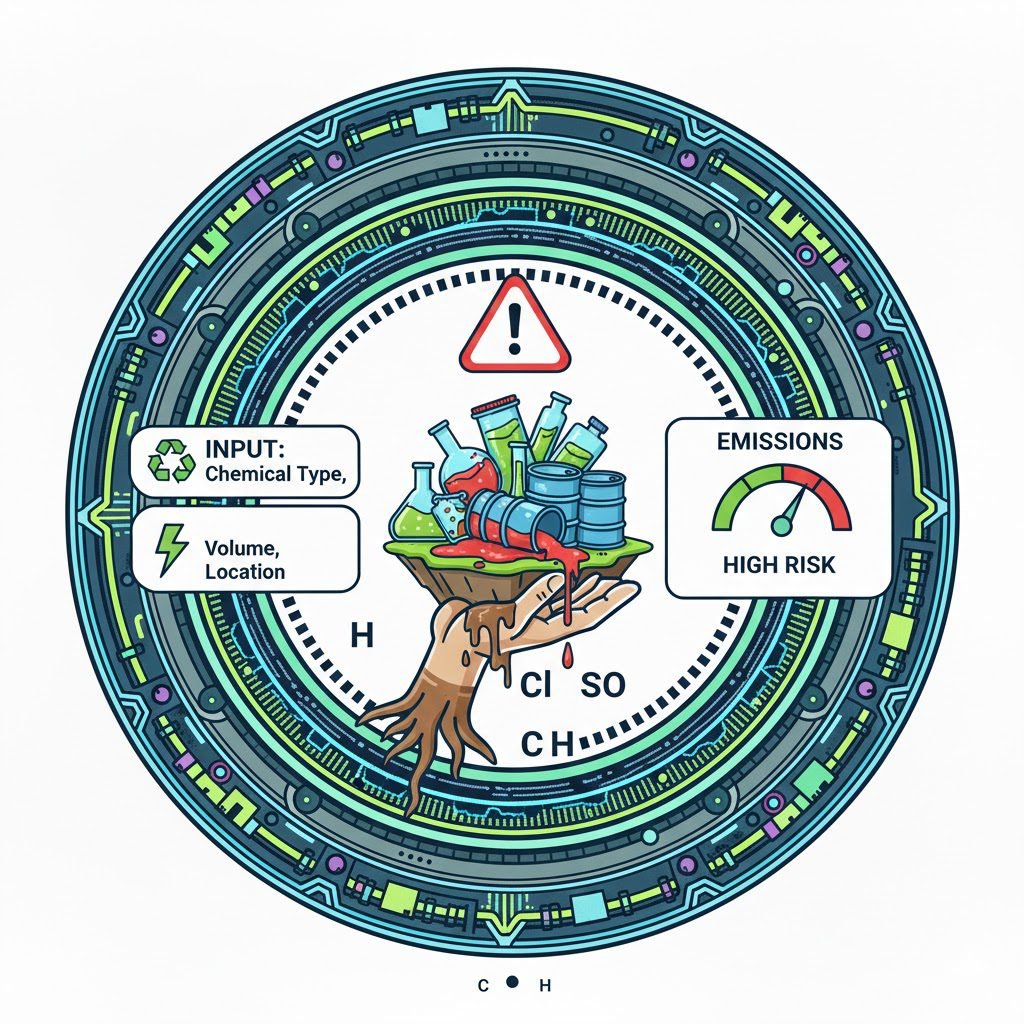
How the Chemical Spill Risk Calculator Works
The calculator evaluates potential spill risk using four main inputs:
-
Volume Stored or Handled (liters)
-
Small volumes (<100 L) generally pose low risk.
-
Medium (100–1000 L) and large volumes (>1000 L) increase the risk score logarithmically.
-
Formula logic:
-
-
Chemical Hazard Level
-
Categories: Low, Medium, High.
-
Low: Non-toxic, non-flammable, non-corrosive.
-
Medium: Moderately toxic or flammable.
-
High: Highly toxic, corrosive, or reactive.
-
Formula logic:
-
-
Storage or Location Type
-
Indoor secured facility, outdoor bunded area, during transport, or near sensitive environments.
-
Certain locations, like near water bodies, elevate potential environmental impact.
-
-
Containment & Prevention Measures
-
Excellent: secondary containment, spill kits, and staff training.
-
Good: basic bunding and procedures.
-
Poor: minimal or no containment.
-
Containment reduces the score, reflecting mitigation effectiveness.
-
Calculating the Overall Risk Score:
The tool combines these factors and assigns a numerical risk score, which is then categorized:
| Score Range | Risk Level | Interpretation |
|---|---|---|
| 1 – 8 | Low Risk | Acceptable with standard controls |
| 9 – 16 | Moderate Risk | Requires monitoring and additional measures |
| 17+ | High Risk | Urgent action needed, high potential harm |
The result panel displays individual metrics, total risk, and overall assessment, along with actionable advice for improving safety.
Step-by-Step Examples
Example 1: Small Laboratory Spill
-
Volume: 50 liters
-
Chemical Hazard: Low
-
Location: Indoor secured facility
-
Containment: Excellent
Calculation:
✅ Outcome: Minimal concern, manageable with routine procedures.
Example 2: Moderate Industrial Storage
-
Volume: 700 liters
-
Chemical Hazard: Medium
-
Location: Outdoor bunded area
-
Containment: Good
Calculation:
✅ Outcome: Acceptable but monitoring recommended; implement additional training.
Example 3: High-Risk Transport Scenario
-
Volume: 1200 liters
-
Chemical Hazard: High
-
Location: Near water bodies
-
Containment: Poor
Calculation:
⚠️ Outcome: Immediate mitigation needed—secondary containment, spill kits, and emergency plans required.
Practical Tips for Reducing Spill Risk
-
Implement secondary containment: Bunds, trays, and barriers.
-
Staff training & drills: Familiarity with safety protocols reduces human error.
-
Regular audits: Inspections of storage, transport, and equipment integrity.
-
Emergency planning: Maintain spill kits, SDS, and environmental response plans.
-
Monitor sensitive areas: Extra precautions for chemicals near water or residential zones.
Related Tools
For further chemical safety insights, consider these related tools:
-
Toxic Chemical Dose Calculator – estimate exposure risk from hazardous substances.
-
pH Neutralization Calculator – evaluate neutralization needs for acidic or basic spills.
-
Personal Exposure Index Calculator – assess occupational chemical exposure risk.
-
Environmental Chemistry Calculators – explore additional tools for chemical safety analysis.
Frequently Asked Questions (FAQs)
1. Can this calculator replace professional safety audits?
No. It is a risk estimation tool. Always consult regulatory guidelines, site-specific experts, and certified safety officers for comprehensive assessments.
2. How accurate is the spill risk score?
The calculator uses volume, hazard, location, and containment to generate risk scores aligned with global safety standards. While reliable for planning, it is not a substitute for real-world inspections.
3. Can I test multiple scenarios?
Absolutely. Adjust the inputs to simulate different storage volumes, hazards, or containment measures. This helps identify high-risk setups before incidents occur.
Conclusion
The Chemical Spill Risk Calculator is an essential tool for anyone handling or storing chemicals. By combining volume, hazard, location, and containment factors, it provides a clear, actionable assessment of potential spill risk. Using this tool, you can enhance safety, protect the environment, and ensure regulatory compliance.
Test your facility’s chemical setups today, explore multiple scenarios, and leverage related resources for a comprehensive safety strategy. Remember: proactive risk assessment is always safer—and more cost-effective—than reactive spill management.