Greenhouse Gas Equivalent Calculator
Greenhouse Gas Equivalent Calculator
Convert your CO₂ emissions (or any amount) into easy-to-understand everyday equivalents – trees, flights, cars, energy & more (globally averaged).
Greenhouse Gas Equivalent Calculator: Visualize Your CO₂ Emissions in Everyday Terms
Understanding your carbon footprint can feel abstract. Numbers like 5,000 kg CO₂e per year might seem big, but what does that actually mean in daily life? The Greenhouse Gas Equivalent Calculator transforms these emissions into tangible, relatable metrics—like the number of trees needed to absorb it, kilometers driven in a car, or even how many plastic bottles it equals. By providing context, this tool helps individuals, businesses, and students visualize the climate impact of their actions and make informed choices.
Why Tracking Your CO₂ Emissions Matters
Every day, human activities—from driving cars to eating meat—contribute to greenhouse gas emissions. While climate science often talks in abstract terms like “gigatons of CO₂,” understanding your personal or organizational emissions can:
-
Empower sustainable choices in transport, diet, and energy use.
-
Highlight high-impact behaviors that can be changed to reduce your footprint.
-
Support global climate goals, such as limiting warming to 1.5°C.
For example, the global average per capita CO₂e emissions are roughly 4,000–7,000 kg per year, yet staying within a safe climate pathway requires reducing this to ~2,000 kg/person/year by 2050. Tools like this make it easier to bridge the gap between abstract numbers and practical action.
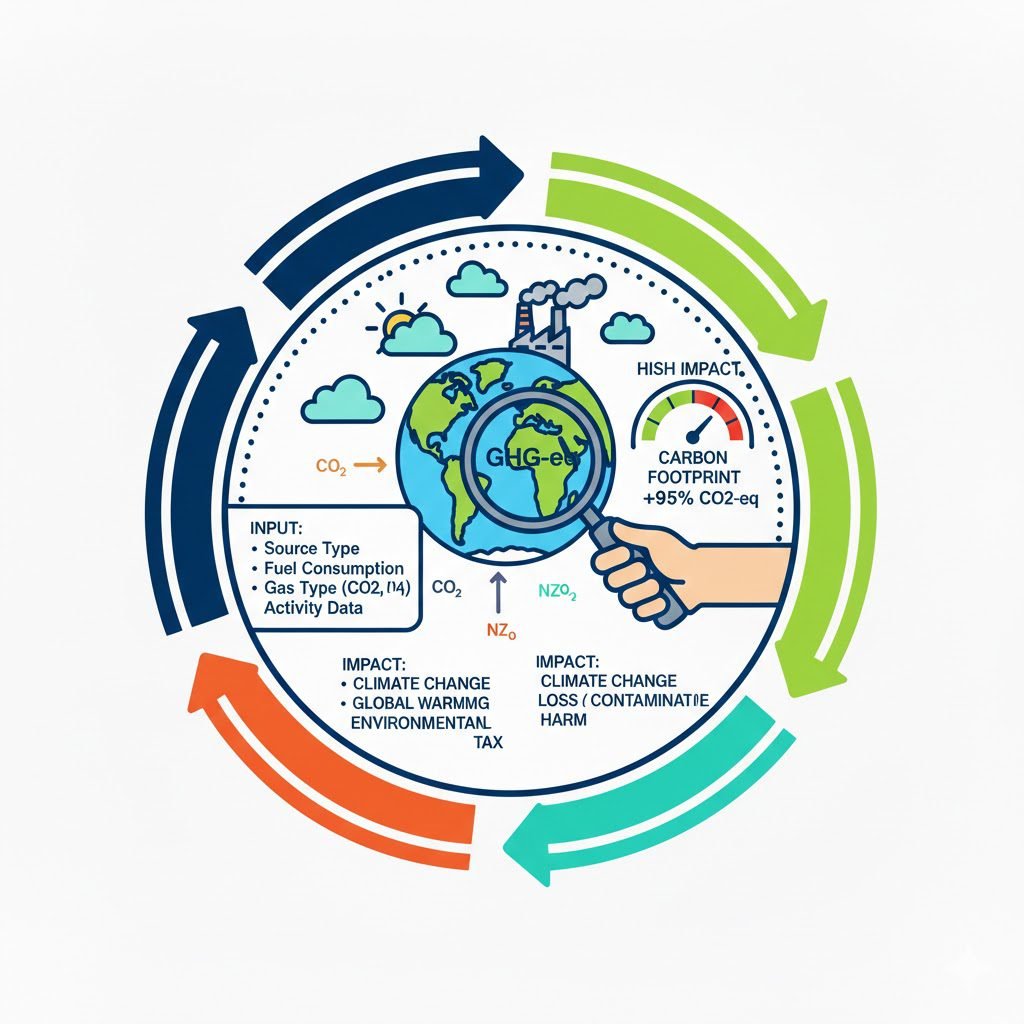
How the Greenhouse Gas Equivalent Calculator Works
The calculator converts CO₂e emissions into familiar equivalents using scientifically-backed average values. Here’s a step-by-step overview:
-
Input your CO₂e value: Enter the total kilograms of CO₂e you want to analyze. This can represent annual emissions, a monthly estimate, or even a one-time event.
-
Select a time period: Options include per year, per month, per day, or a single event. This contextualizes the emissions meaningfully.
-
Calculate equivalents: The tool automatically computes relatable metrics using global averages. Key calculations include:
Equivalent Formula (Global Average) Example (for 5,000 kg CO₂e/year) Trees CO₂e ÷ 22 kg CO₂/year per mature tree5,000 ÷ 22 ≈ 227 treesCar travel CO₂e ÷ 0.19 kg/km5,000 ÷ 0.19 ≈ 26,316 kmFlights CO₂e ÷ 1,000 kg per long-haul flight5,000 ÷ 1,000 = 5 flightsSmartphones CO₂e ÷ 55 kg per device5,000 ÷ 55 ≈ 91 phonesBeef consumption CO₂e ÷ 27 kg per kg of beef5,000 ÷ 27 ≈ 185 kg beefPlastic bottles CO₂e ÷ 0.083 kg per 500ml bottle5,000 ÷ 0.083 ≈ 60,241 bottles -
Get actionable advice: The tool provides guidance on reducing emissions through diet, energy use, transportation, and lifestyle choices.
Note: Values are global averages and meant for educational purposes. Local emissions factors may vary.
Real-Life Examples of CO₂e Equivalents
Here’s how the calculator brings emissions to life:
Example 1: Annual Personal Emissions
-
Scenario: You emit 4,800 kg CO₂e per year.
-
Calculator Results:
-
~218 mature trees to absorb it.
-
~25,263 km in a standard petrol car.
-
~5 long-haul flights.
-
-
Takeaway: Planting even a small number of trees and reducing long flights can significantly lower your footprint.
Example 2: Monthly Household Energy Use
-
Scenario: Your household emits 800 kg CO₂e per month through electricity and heating.
-
Calculator Results:
-
Equivalent to ~36 trees per month.
-
~4,210 km driven in a car.
-
-
Takeaway: Simple measures like switching to LED lighting or efficient appliances make a visible impact.
Example 3: Event-Based Emissions
-
Scenario: A single 2,000 kg CO₂e corporate event.
-
Calculator Results:
-
~91 trees needed to offset.
-
Equivalent to 2 long-haul flights.
-
-
Takeaway: Calculating emissions before events helps organizers plan greener alternatives, like hybrid travel or low-carbon catering.
Practical Tips for Reducing Your GHG Footprint
-
Transportation: Choose public transit, cycling, or electric vehicles. Avoid unnecessary flights.
-
Diet: Incorporate plant-based meals; reduce high-carbon foods like beef and dairy.
-
Energy: Opt for renewable electricity and energy-efficient appliances.
-
Consumption: Reduce single-use plastics and unnecessary electronics.
-
Engagement: Test different CO₂e values in the calculator to see how lifestyle changes affect your footprint.
Related Tools to Explore
For deeper environmental insights, consider these calculators:
-
Vehicle Noise vs. Air Pollution Calculator – Understand the combined environmental impact of vehicles.
-
Industrial Odor Index Calculator – Evaluate industrial emissions in your community.
-
Heavy Rain Runoff Contaminant Calculator – Measure water runoff pollution from urban areas.
-
Environmental Chemistry Calculators – Explore more chemistry-based environmental tools.
FAQs
1. How accurate is the Greenhouse Gas Equivalent Calculator?
The calculator uses global average factors to provide relatable equivalents. While not region-specific, it’s a reliable educational tool for understanding relative impact.
2. Can I calculate emissions for short-term activities?
Yes! Simply enter the total CO₂e for the event or activity and select Single Event / Total as the time period.
3. How can I offset my CO₂e emissions?
Planting trees, supporting renewable energy, reducing meat consumption, and improving energy efficiency are effective ways to offset emissions. The calculator shows how much your activities contribute to the total.
Conclusion
The Greenhouse Gas Equivalent Calculator turns abstract CO₂ numbers into concrete, everyday comparisons. By visualizing emissions as trees, flights, or plastic bottles, users can understand the real-world impact of their choices. Whether tracking personal, household, or event-based emissions, this tool helps guide sustainable decisions and encourages actionable change.
Try it today, explore different scenarios, and discover simple ways to reduce your carbon footprint while staying informed and empowered.