Laundry Detergent Pollution Calculator
Laundry Detergent Pollution Calculator
Estimate the environmental footprint of your laundry detergent use — water pollution, chemicals & packaging waste.
Global average approximation — lower impact = better choice.
Laundry Detergent Pollution Calculator: Measure Your Environmental Impact
Every week, countless households run their washing machines without thinking about the hidden environmental cost. The Laundry Detergent Pollution Calculator helps you estimate the impact of your detergent choices, water temperature, and fabric softener usage — showing how your laundry habits affect rivers, oceans, and ecosystems over time.
Whether you’re an eco-conscious homeowner, a student, or simply curious about reducing chemical pollution, this tool provides practical, actionable insights to minimize your footprint while keeping your clothes fresh and clean.
Why Your Laundry Choices Matter
Most people think about energy consumption when doing laundry, but detergents, softeners, and water temperature play an equally important role in environmental pollution.
Key concerns include:
-
Chemical runoff: Conventional detergents contain phosphates, surfactants, and optical brighteners that harm aquatic life.
-
Microplastics: Pods and synthetic powders often release microplastics into wastewater.
-
Packaging waste: Single-dose pods and liquid detergents contribute to plastic pollution.
-
Energy consumption: Warm and hot water washes increase carbon emissions.
By measuring these factors systematically, the calculator provides a personalized environmental impact score, helping you make informed decisions.
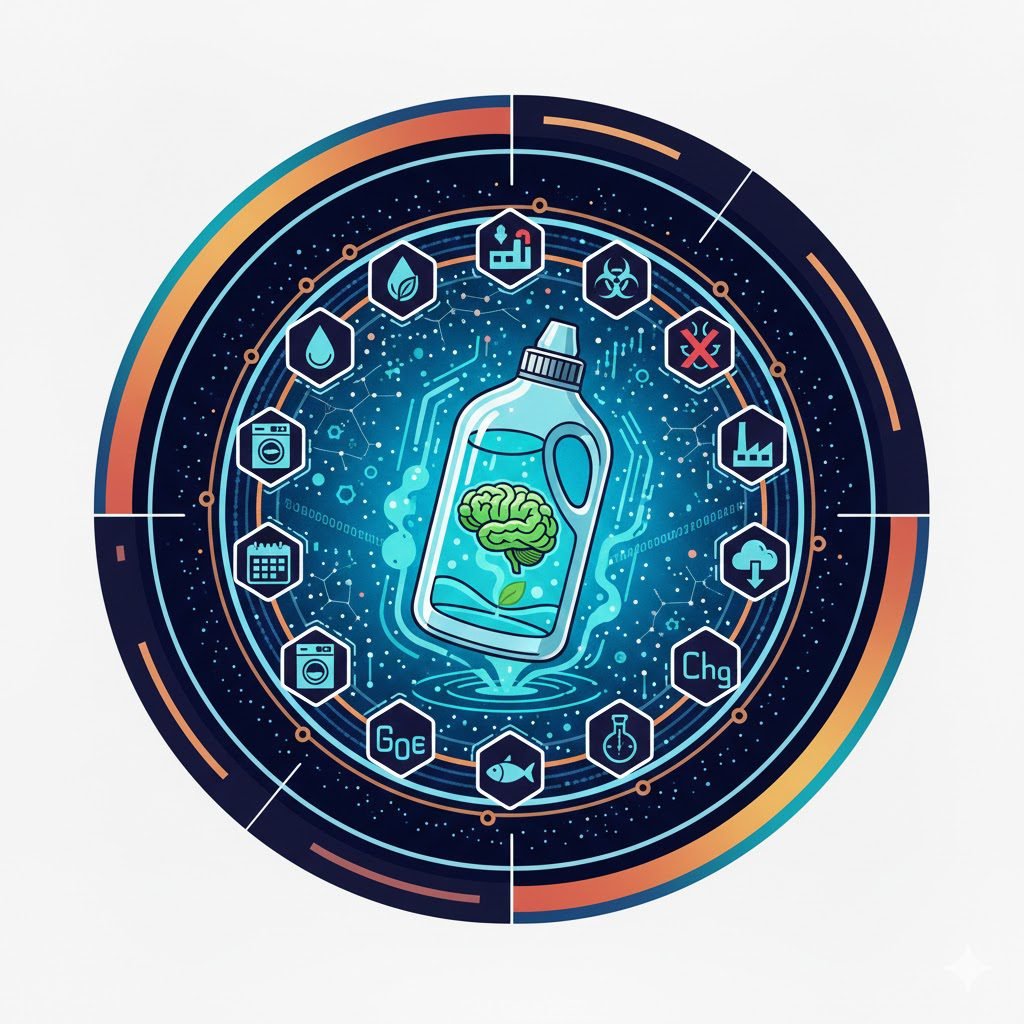
How the Laundry Detergent Pollution Calculator Works
Our tool simplifies a complex problem by combining user inputs with scientifically-informed multipliers. Here’s a breakdown:
1. Inputs You Provide
-
Loads per week: Average laundry frequency.
-
Years of usage: Duration over which your habits persist.
-
Detergent type: Conventional, pods, eco-friendly, natural, or zero-waste options.
-
Fabric softener use: Never, sometimes, or always.
-
Water temperature preference: Cold, mixed, or mostly warm/hot.
2. Calculation Logic
The calculator applies a simple formula to estimate total environmental impact:
Explanation:
-
baseScore[detergent]: Pre-defined pollution intensity per detergent type (higher = more harmful).-
Example: Conventional liquid = 85 pts, Pods = 95 pts, Eco-liquid = 35 pts.
-
-
softenerMultiplier: Extra environmental impact from fabric softeners.-
Example: Never = 1.0, Sometimes = 1.6, Always = 2.5
-
-
waterTempMultiplier: Hot water increases chemical impact; cold water reduces it.-
Example: Cold = 0.6, Mixed = 1.0, Hot = 1.8
-
-
totalLoads: Total washes over years:loadsPerWeek × 52 × years
3. Outputs You Receive
-
Total Laundry Loads — Gives perspective on your activity over time.
-
Pollution Score per Load — Shows relative environmental harm of each wash.
-
Total Environmental Impact Score — Aggregated pollution, categorized as Very Low, Low, Moderate, High, or Very High.
-
Estimated Plastic Packaging Waste — Approximate kilograms of plastic generated from detergent containers or pods.
Step-by-Step Examples
Example 1: Average Household
-
Loads/week: 7
-
Years: 5
-
Detergent: Conventional liquid
-
Softener: Sometimes
-
Water: Mostly cold
Calculation:
Insight: Cold water helps reduce impact, but softeners and chemical-heavy detergents still cause significant pollution.
Example 2: Eco-Friendly Laundry Routine
-
Loads/week: 5
-
Years: 3
-
Detergent: Natural / soap nuts
-
Softener: Never
-
Water: Cold
Calculation:
Insight: Switching to natural detergents and skipping fabric softeners drastically lowers environmental impact.
Example 3: High-Impact Scenario
-
Loads/week: 10
-
Years: 10
-
Detergent: Pods
-
Softener: Always
-
Water: Hot
Calculation:
Insight: Pods and constant softener use with hot water create extreme environmental strain.
Tips for Reducing Laundry Pollution
-
Switch to eco-certified, plant-based, or zero-waste detergents
-
Use cold water whenever possible (reduces energy and chemical runoff)
-
Skip fabric softeners — alternatives: vinegar, wool dryer balls
-
Wash full loads only
-
Try soap nuts, laundry balls, or reusable strips for ultra-low impact
Every small change contributes to cleaner water, safer ecosystems, and less plastic pollution.
Related Tools You Might Find Useful
-
Household Appliance Emission Calculator – Measure energy and carbon impact from your appliances.
-
Daily Water Use Efficiency Calculator – Track water consumption at home.
-
Environmental Chemistry Calculators – Explore tools for water, air, and soil chemical analysis.
These resources complement the Laundry Detergent Pollution Calculator, allowing a comprehensive approach to reducing household environmental impact.
FAQs
Q1: Can this calculator really estimate chemical pollution accurately?
Yes. It provides relative impact scores based on scientifically-informed multipliers for detergents, water temperature, and softener use. While it’s an approximation, it gives a realistic idea of your household footprint.
Q2: Does cold water really reduce pollution?
Absolutely. Cold water requires less energy and reduces the release of chemical residues into wastewater, lowering your overall impact significantly.
Q3: Are pods worse than liquid or powder detergents?
Generally, yes. Pods contain higher concentrations of chemicals and plastic casings, leading to more microplastic pollution and packaging waste.
Conclusion
The Laundry Detergent Pollution Calculator empowers you to see, measure, and improve your laundry habits. By entering your weekly loads, detergent type, softener use, and water temperature, you get a detailed environmental impact score and practical tips to reduce pollution.
Take control of your laundry footprint today — experiment with eco-friendly detergents, cold water, and natural alternatives. For a full household sustainability strategy, explore our Household Appliance Emission Calculator and Daily Water Use Efficiency Calculator to see your total environmental impact.
Clean clothes, cleaner rivers — your choices make a difference!