Toxic Gas Exposure Limit Calculator
Toxic Gas Exposure Limit Calculator
Compare measured concentration against international exposure limits (IDLH, TWA, STEL) and estimate risk level.
Toxic Gas Exposure Limit Calculator: Ensure Safety in Hazardous Environments
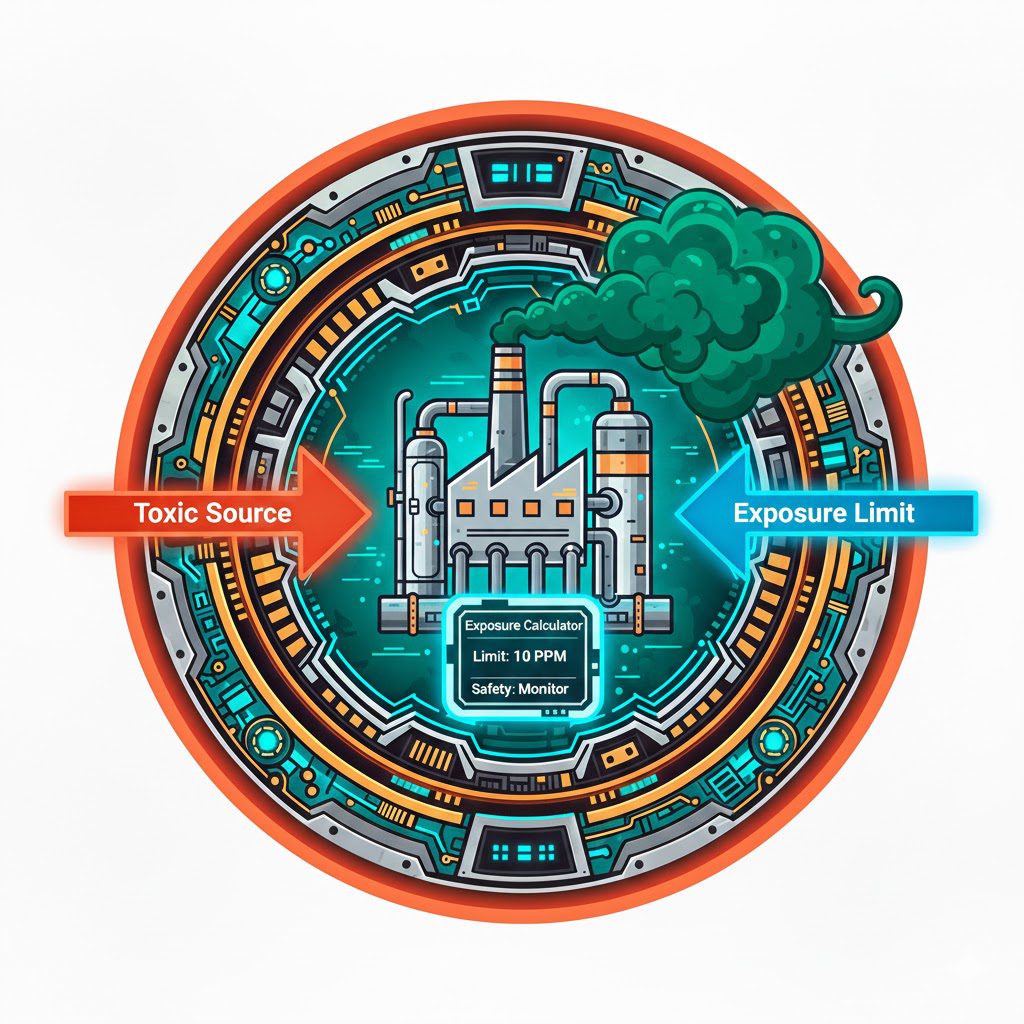
The Toxic Gas Exposure Limit Calculator is an essential tool for industrial safety officers, chemical engineers, and laboratory personnel. Imagine working in a chemical plant where ammonia leaks occur periodically. Without precise monitoring, even small exposure can pose serious health risks. This calculator helps translate measured gas concentrations and exposure durations into clear risk assessments, ensuring timely protective measures.
Understanding these exposure limits isn’t just regulatory compliance—it’s about protecting lives, preventing accidents, and optimizing workplace safety. By combining international standards like NIOSH, OSHA, and ACGIH, this tool provides a practical, real-time evaluation for multiple gases including chlorine, hydrogen sulfide, sulfur dioxide, formaldehyde, and benzene.
How the Toxic Gas Exposure Limit Calculator Works
Inputs
To use the calculator effectively, you need:
-
Toxic Gas / Substance – select from predefined options or define custom limits.
-
Measured Concentration (ppm) – the actual gas level detected.
-
Exposure Duration (minutes) – length of time personnel are exposed.
-
Custom Limits (optional) – IDLH, TWA, STEL values if working with unlisted chemicals.
Outputs
The calculator returns:
-
Risk Assessment: Safe, Moderate, High Risk, or Immediate Danger.
-
Comparison Against Limits: Displays IDLH, TWA, and STEL.
-
Detailed Guidance: Advises protective measures, exposure implications, and references international standards.
Calculation Logic
The core logic is simple but scientifically robust:
-
Immediate Danger (IDLH): If concentration ≥ IDLH, the tool flags an Immediate Danger alert.
-
Short-Term High Risk (STEL): If exposure ≤ 15 min and concentration ≥ STEL, the risk is High.
-
Moderate Risk (TWA): If concentration ≥ TWA over standard work periods, the risk is Moderate.
Example Formula:
Where Conc is measured concentration in ppm.
Step-by-Step Examples
Example 1: Ammonia Exposure
-
Concentration: 40 ppm
-
Duration: 30 min
-
Limits: TWA = 25 ppm, STEL = 35 ppm, IDLH = 300 ppm
Analysis:
-
40 ppm > STEL → Duration = 30 min → exceeds short-term but not immediate limit.
-
Risk: Moderate Risk
Example 2: Carbon Monoxide Leak
-
Concentration: 1300 ppm
-
Duration: 10 min
-
Limits: IDLH = 1200 ppm
Analysis:
-
1300 ppm ≥ IDLH → Immediate Danger → evacuate immediately.
Example 3: Custom Chemical Scenario
-
Chemical: Custom solvent
-
Concentration: 15 ppm
-
Duration: 60 min
-
Limits: TWA = 10 ppm, STEL = 20 ppm, IDLH = 100 ppm
Analysis:
-
15 ppm > TWA → exposure risk = Moderate
-
Recommendation: Implement ventilation or PPE adjustments.
These examples illustrate how easily industrial personnel can quantify hazards using the calculator instead of relying on generic guesswork.
Practical Applications
-
Chemical Plants: Monitor gases like H₂S, Cl₂, NH₃ in production areas.
-
Laboratories: Evaluate exposure risk when handling reactive substances.
-
Emergency Response: Quickly assess exposure during leaks or spills.
-
Compliance Audits: Ensure adherence to OSHA, NIOSH, and local safety regulations.
For related tools, you can check our Pressure Relief Valve Sizing Tool, Pipe Burst Pressure Calculator, or Hazardous Area Classification Tool to enhance safety planning.
FAQs
Q1: What is IDLH?
A: IDLH stands for Immediately Dangerous to Life or Health. Concentrations above this limit require urgent evacuation.
Q2: How does STEL differ from TWA?
A: STEL is a 15-minute short-term exposure limit, while TWA represents an 8-hour average exposure. Both are crucial for assessing worker safety.
Q3: Can I use this calculator for unlisted chemicals?
A: Yes, select “Custom” and input IDLH, TWA, and STEL manually. Always refer to SDS sheets for accuracy.
Conclusion
The Toxic Gas Exposure Limit Calculator simplifies a critical aspect of industrial safety—translating gas concentrations into actionable risk levels. By providing real-time feedback, clear risk assessments, and internationally referenced guidance, it empowers teams to make informed safety decisions.
Test various concentrations, durations, and gases to simulate scenarios in your facility. For extended industrial safety planning, explore related calculators like the Spill Volume and Spread Estimator or our Industrial Chemistry Calculators.
Protect your team, prevent accidents, and maintain compliance—all in one intuitive tool.