
Cream to Whip Yield Calculator
Cream to Whip Yield Calculator
Calculate how much whipped cream you’ll get from liquid cream. Enter amount & type (heavy/whipping/double) for accurate volume yield in ml/cups – perfect for desserts, toppings & recipes anywhere.
How Much Whipped Cream Will You Get?
Whipping cream might seem simple, but achieving the perfect volume, texture, and consistency can often feel like a science experiment gone wrong. That’s where the Cream to Whip Yield Calculator comes in. Whether you’re preparing desserts, topping cakes, or creating coffee drinks, this tool helps you predict exactly how much whipped cream you’ll get from any given amount of liquid cream—saving you from guesswork, waste, and disappointing results.
Imagine you have 250 ml of heavy cream and want fluffy, medium peaks for a pie topping. How much whipped cream will that yield? Manually calculating this involves considering fat content, additives, whipping consistency, and unit conversions—a process that can quickly become confusing. Our calculator takes all these factors into account and gives you instant, precise results.
How Does the Cream to Whip Yield Calculator Work?
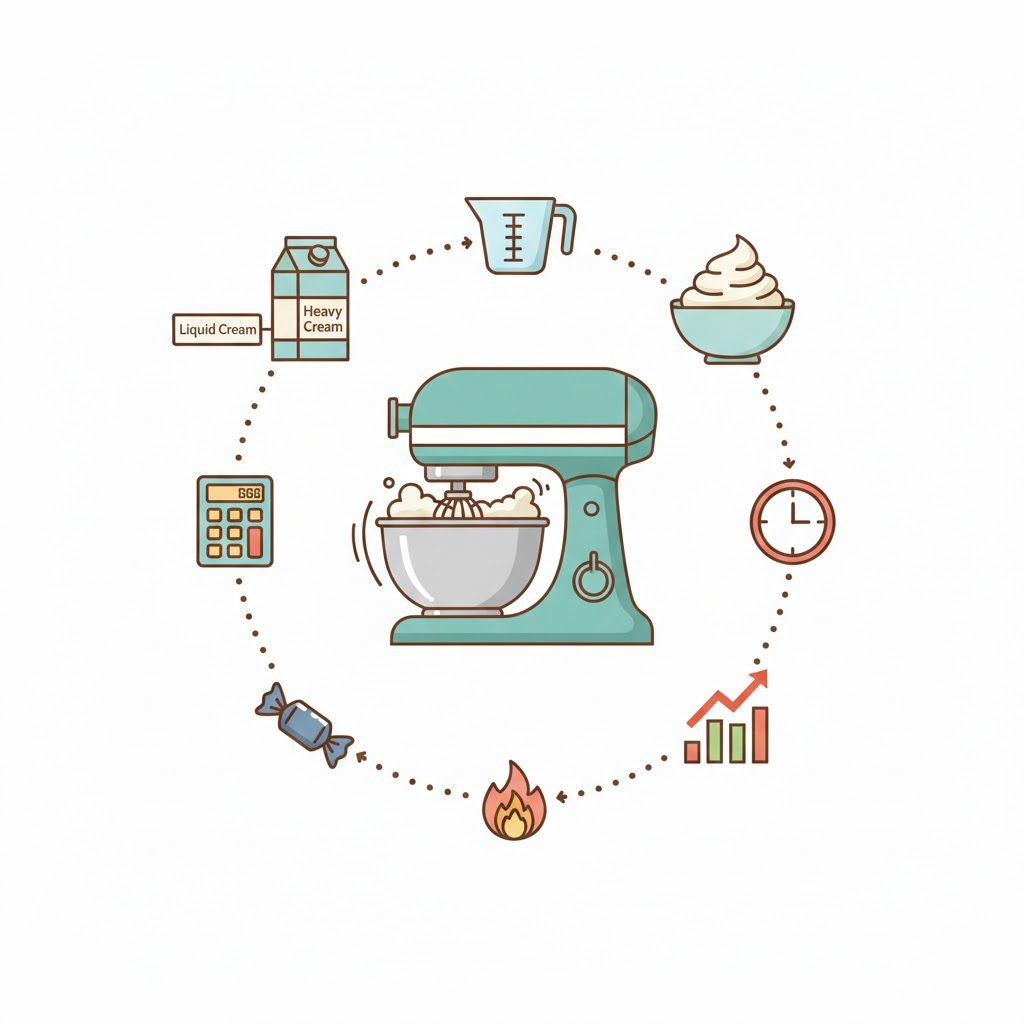
At its core, the calculator works by multiplying the volume of liquid cream by a series of adjustment factors based on cream type, whip consistency, and additives.
Inputs You Provide
-
Amount of Liquid Cream: Enter in milliliters (ml) or US cups. The tool automatically converts units where necessary.
-
Cream Type / Fat Content: Heavy cream (≥36% fat), double cream (48%+ fat, UK style), or medium/coffee cream (25–30% fat). Higher fat content generally yields more volume when whipped.
-
Desired Whip Consistency: Soft peaks, medium peaks, or stiff peaks. Stiffer peaks slightly reduce volume due to air compression.
-
Additives (Optional): Sugar, stabilizers like gelatin or cornstarch, or plain. Additives affect volume slightly—sugar can reduce expansion while stabilizers can increase it.
How the Calculator Determines Yield
The calculation follows this logical formula:
-
Base Factor: Reflects fat content and type of cream.
-
Peaks Factor: Accounts for soft, medium, or stiff peak consistency.
-
Additives Factor: Adjusts for sugar or stabilizers.
Once calculated, the tool converts the result back into cups (if needed) and provides a descriptive yield quality like modest, good, or excellent.
Why Do Different Cream Types Whip Differently?
The fat content in cream directly affects its ability to hold air and volume:
-
Heavy Cream (36%+ fat): Produces a stable, fluffy whip with good volume. Ideal for toppings and general desserts.
-
Double Cream (48%+ fat): Extremely rich, produces high-volume, dense whipped cream. Best for piping and decadent desserts.
-
Medium / Coffee Cream (25–30% fat): Lower volume and lighter texture; good for folding into mousses or coffee.
By selecting the appropriate type in the calculator, you get an accurate estimate for your specific recipe needs.
How Does Peak Consistency Affect Yield?
Whipped cream volume isn’t just about fat—it’s also about how stiffly you whip it:
-
Soft Peaks: Light, airy, slightly droopy. Volume can increase slightly due to less air compression.
-
Medium Peaks: Holds shape, curls at the tip. Provides predictable volume for desserts like pies and parfaits.
-
Stiff Peaks: Firm, stands straight. Slightly reduced volume due to air compression but perfect for detailed piping.
The calculator integrates these variations to provide realistic volume predictions.
Can Additives Affect Whipped Cream Yield?
Yes, optional ingredients like sugar or stabilizers influence expansion:
-
Sugar: Reduces volume slightly because it interferes with foam formation.
-
Stabilizers (gelatin, cornstarch, mascarpone): Can increase volume slightly and improve holding power.
-
Plain / None: Provides baseline expansion based purely on cream type and whipping.
Step-by-Step Examples
Example 1: Standard Dessert Topping
-
Input: 250 ml heavy cream, medium peaks, no additives
-
Calculation:
250 × 2.5 × 1.0 × 1.0 ≈ 625 ml -
Result: ~625 ml whipped cream (~2.6 cups) – Good standard yield
Example 2: Double Cream for Piping
-
Input: 200 ml double cream, stiff peaks, stabilizer added
-
Calculation:
200 × 2.8 × 0.9 × 1.05 ≈ 529 ml -
Result: ~529 ml whipped cream (~2.2 cups) – Excellent rich, firm volume
Example 3: Medium Cream for Coffee Dessert
-
Input: 300 ml medium cream, soft peaks, sugar added
-
Calculation:
300 × 1.8 × 1.1 × 0.95 ≈ 564 ml -
Result: ~564 ml whipped cream (~2.4 cups) – Modest but creamy and light
These examples show how adjusting type, peaks, or additives directly influences the final whipped cream yield.
Tips for Perfect Whipped Cream
-
Always chill cream, bowl, and whisk for at least 15 minutes before whipping.
-
Use a metal or glass bowl for optimal aeration.
-
Start slow, then increase to high speed to incorporate air evenly.
-
Sweeten after reaching soft peaks to avoid volume reduction.
-
Avoid overwhipping—cream can separate into butter.
-
Stabilizers are useful for holding peaks longer in hot or layered desserts.
FAQs About Whipped Cream Yield
1. Can I use low-fat cream in this calculator?
Yes, but yields will be significantly lower and texture may be softer. The tool allows selection of medium-fat creams for realistic results.
2. How accurate is the volume prediction?
It accounts for cream type, whipping peaks, and additives. While exact results may vary slightly due to temperature and equipment, it provides a reliable estimate for recipe planning.
3. Can I scale the recipe for large batches?
Absolutely. Enter your total cream amount, select type and peaks, and the calculator scales the yield accordingly.
Conclusion
The Cream to Whip Yield Calculator is your ultimate kitchen companion for precise whipped cream measurement. By accounting for cream type, consistency, and additives, it removes guesswork and ensures your desserts, drinks, and toppings are perfectly proportioned. Try experimenting with different inputs and discover how small adjustments can optimize volume and texture. For more precision in your cooking, explore our related tools like the Egg Freshness Calculator, Equipment Replacement Guide, and Flavor Strength Balancer for full kitchen efficiency.