
Egg Freshness Calculator
Egg Freshness Calculator
Check egg freshness using the classic water float test – a simple, reliable method used worldwide to estimate egg age and safety.
How to Check Egg Quality Easily at Home
Knowing whether your eggs are safe to eat is something every home cook worries about. The Egg Freshness Calculator makes this simple. Instead of guessing or risking a bad meal, you can quickly determine egg freshness using the classic water float test combined with smell and age checks. This tool turns a traditional method into an interactive, precise, and reliable way to evaluate your eggs, saving time, preventing waste, and keeping your meals safe.
How Does the Egg Freshness Calculator Work?
The calculator is designed to mimic real-life kitchen checks. It uses three main inputs:
-
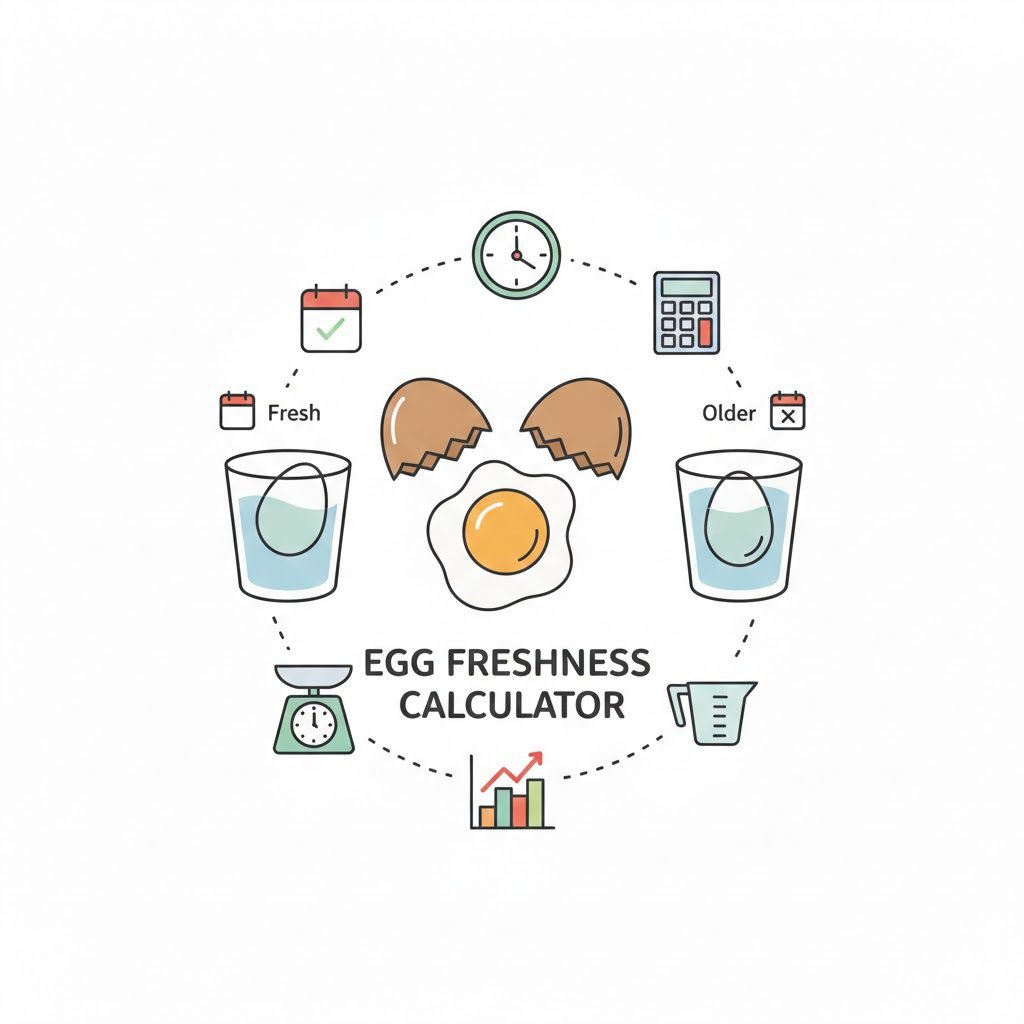
Egg Position in Water – When you place an egg in water, its position tells you a lot about its age:
-
Lies flat at the bottom: very fresh
-
Tilts or one end raised: moderately fresh
-
Stands upright: older but still usable
-
Floats: old, proceed with caution
-
-
Smell Test – Even if an egg passes the float test, a bad odor after cracking indicates spoilage. Always check for this.
-
Optional Age in Days – If you know approximately when the egg was laid or purchased, you can add it for a more precise estimate.
The tool calculates freshness level, approximate age, and provides a safety recommendation. It also explains the reasoning behind each result, so you understand why an egg is safe or not.
The underlying logic is straightforward:
This simple algorithm mirrors real-world kitchen wisdom but gives an instant, clear answer.
Why Should I Use This Calculator Instead of Just Guessing?
Relying solely on intuition or the date on the carton can be risky. Eggs are porous and can lose moisture, allowing bacteria to grow if stored incorrectly. Using this calculator:
-
Prevents foodborne illnesses
-
Reduces waste by accurately identifying usable eggs
-
Saves time in cooking prep
-
Provides guidance for baking, boiling, or frying based on egg age
For example, older eggs (tilted or upright) are easier to peel when boiled, while very fresh eggs are ideal for poaching or frying.
How Accurate Is the Water Float Test?
The float test works because eggs develop an air cell as they age. Over time, moisture escapes through the shell, enlarging the air pocket.
-
Flat at bottom: air cell < 1/8 inch
-
Tilted: air cell 1/8–1/4 inch
-
Upright: air cell 1/4–3/8 inch
-
Floats: air cell > 3/8 inch
This correlates closely with age and freshness. Refrigerated eggs may last 4–5 weeks beyond packing, while room-temperature storage shortens shelf life significantly.
Step-by-Step Examples
Example 1: Fresh Eggs for Breakfast
-
Egg lies flat in water
-
No smell
-
Days since purchase: 5
Result: Very Fresh, 0–10 days old, safe to eat. Ideal for frying or poaching.
Example 2: Moderately Fresh Egg for Baking
-
Egg tilts in water
-
No smell
-
Days since purchase: 14
Result: Moderately Fresh, about 1–3 weeks old. Perfect for baking where egg structure is less critical.
Example 3: Old Egg for Hard-Boiling
-
Egg stands upright in water
-
No smell
-
Days since purchase: 30
Result: Older but Usable, 3–6 weeks old. Easier to peel for boiled eggs, but check before consuming.
Example 4: Spoiled Egg
-
Egg floats
-
Bad smell
-
Days since purchase: unknown
Result: Bad / Spoiled, discard immediately. Safety overrides everything else.
What Tips Can Improve Accuracy?
-
Use room-temperature water for the float test. Cold water can mask subtle differences in float behavior.
-
Crack eggs into a separate bowl to inspect color and smell before adding to recipes.
-
Adjust your cooking methods based on egg age: older eggs work well for hard boiling, while very fresh ones excel in delicate preparations like poaching.
FAQs About Egg Freshness
Q1: Can a floating egg still be safe to eat?
Sometimes, yes. Floating indicates a large air cell, meaning the egg is older. If the smell and appearance are fine, it may still be usable, especially in baking. Always check before eating.
Q2: How long do refrigerated eggs last?
Most eggs remain good for 4–5 weeks after packing when stored below 40°F (4°C). Room-temperature storage shortens this to 1–2 weeks.
Q3: Does the calculator work for farm-fresh eggs?
Yes. Farm eggs follow the same float test principles. Note that storage conditions can alter the timeline slightly, so always include a smell check.
Why Use This Tool Over Manual Methods?
While traditional float tests work, this calculator combines water position, smell, and optional age to give a complete picture. It’s faster, more precise, and removes guesswork. Additionally, the built-in guidance helps even novice cooks avoid mistakes.
For home cooks exploring ingredient control and recipe optimization, you may also find related tools useful:
-
Grain Absorption Calculator for precise rice and grain cooking
-
Fermentation Time Predictor for consistent sourdough or yogurt results
-
Fat to Flavor Calculator to balance richness in cooking
Conclusion
The Egg Freshness Calculator is more than a novelty—it’s a practical kitchen companion that ensures safety, reduces waste, and optimizes cooking results. By combining float tests, smell checks, and optional age inputs, it provides a reliable freshness assessment in seconds. Whether you’re a casual cook or a home chef, this tool transforms everyday eggs into perfectly timed ingredients for your meals.
Test different eggs, check results, and explore related cooking tools to elevate your kitchen precision and confidence.