Evaporation Loss Calculator
Evaporation Loss Calculator
Estimate annual water loss due to evaporation from open water bodies (ponds, reservoirs, tanks) and evaluate potential reduction measures based on global water management standards.
Evaporation Loss Calculator: Estimate Water Loss and Maximize Efficiency
Water management is a growing challenge worldwide, particularly for farmers, reservoir managers, and environmental engineers. The Evaporation Loss Calculator is a practical tool designed to help you estimate annual water loss from ponds, reservoirs, tanks, and swimming pools. Understanding evaporation not only allows you to conserve precious water but also optimize your water infrastructure for efficiency and sustainability.
Imagine a small farm pond that appears full year-round but mysteriously loses water every season. The culprit? Evaporation. Using this calculator, you can quantify how much water is lost, explore reduction measures, and plan effective water-saving strategies.
Why Understanding Evaporation Matters
Evaporation is a natural process where water turns into vapor and escapes from open water surfaces. Its impact can be significant, particularly in arid regions or during hot, windy seasons. Key benefits of estimating evaporation include:
-
Water Conservation: Identify how much water you can save with covers or shade.
-
Resource Planning: Ensure your reservoirs or tanks meet agricultural, industrial, or recreational needs.
-
Cost Reduction: Reduce unnecessary water replenishment and associated expenses.
-
Sustainability: Support long-term environmental and operational goals.
Water losses due to evaporation can range from 10% to over 50% of stored water annually, depending on climate, surface area, and management measures. Knowing these numbers allows you to take informed actions.
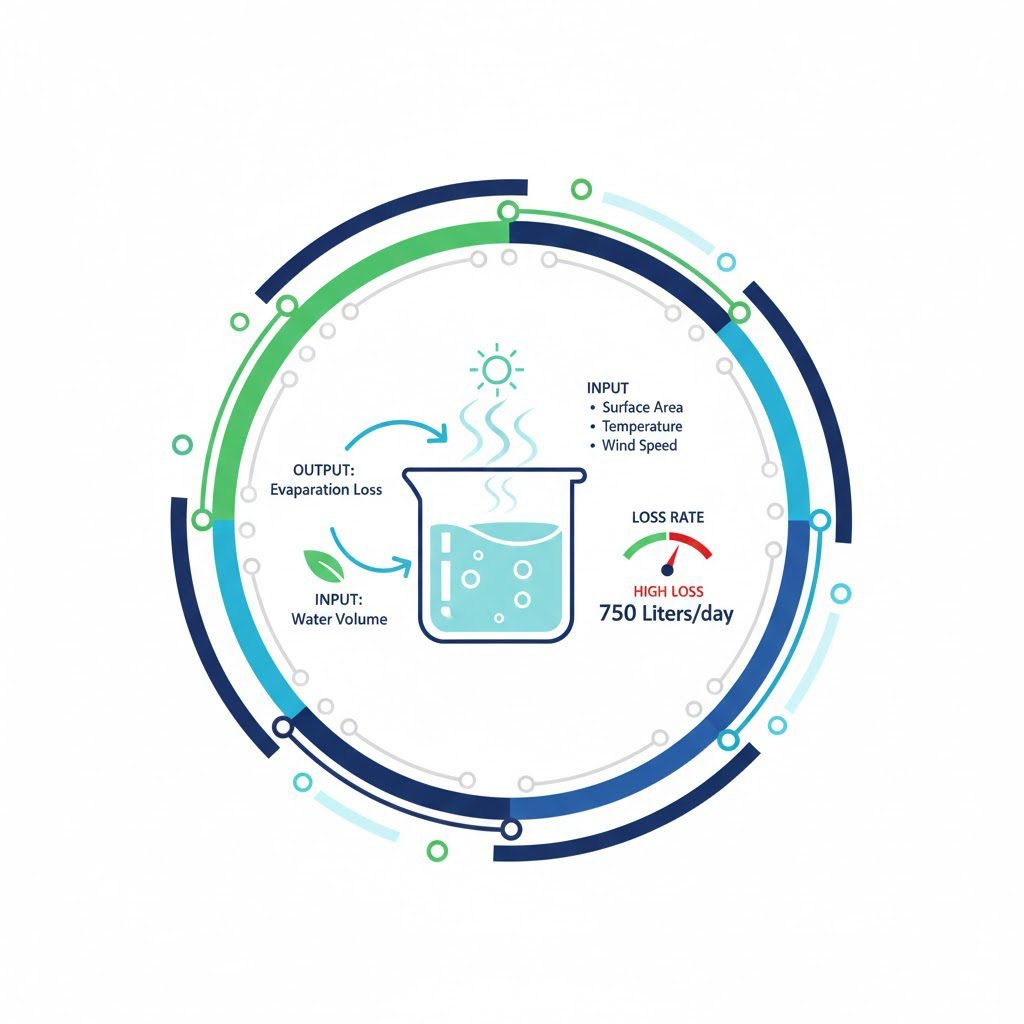
How the Evaporation Loss Calculator Works
This calculator uses established hydrological formulas and globally accepted water management standards. Here’s a simple breakdown:
Inputs Required:
-
Surface Area of Water Body (m²): The total horizontal area exposed to evaporation.
-
Annual Pan Evaporation Rate (mm/year): Measured using a standard Class A evaporation pan.
-
Pan Coefficient (Kp): A factor that adjusts pan measurements to actual water bodies (0.6–0.9 depending on water type).
-
Water Body Type: Pond, reservoir, swimming pool, or canal.
-
Evaporation Reduction Measures: Shade, floating covers, or chemical monolayers.
Core Calculation Logic:
The evaporation volume is calculated using the formula:
Reduction Factor Example:
-
No measure: 1
-
Shade Nets: 0.60 (reduces 30–50%)
-
Floating Covers: 0.20 (reduces 70–90%)
-
Chemical Monolayer: 0.70 (reduces 20–40%)
These values reflect real-world efficiency and allow you to plan practical water-saving interventions.
Step-by-Step Examples
Example 1: Small Farm Pond
-
Area: 500 m²
-
Pan Evaporation: 1200 mm/year
-
Pan Coefficient: 0.7
-
Reduction Measure: Shade Nets
Calculation:
Result: Using shade nets can save 168 m³/year, reducing operational water costs significantly.
Example 2: Reservoir
-
Area: 10,000 m²
-
Pan Evaporation: 1500 mm/year
-
Pan Coefficient: 0.8
-
Reduction Measure: Floating Covers
Calculation:
Result: Floating covers drastically reduce evaporation, saving 9,600 m³/year for a large reservoir.
Example 3: Swimming Pool
-
Area: 50 m²
-
Pan Evaporation: 1600 mm/year
-
Pan Coefficient: 0.7
-
Reduction Measure: None
Calculation:
Result: Without any reduction measures, a small pool loses 56 m³/year. Installing floating covers could save up to 45–50 m³/year.
Practical Tips to Reduce Evaporation
-
Use Floating Covers: Highly effective for large ponds and reservoirs.
-
Install Shade Nets: Suitable for smaller ponds or tanks.
-
Consider Chemical Monolayers: Forms a thin layer reducing water loss in specific climates.
-
Windbreaks & Vegetation: Reduce surface wind, lowering evaporation rates.
-
Regular Monitoring: Compare calculated vs. observed losses for accuracy.
For additional water management insights, check our Hydropower Potential Calculator and Microbial Contamination Risk Calculator.
Frequently Asked Questions (FAQs)
Q1: What is the pan coefficient and why does it vary?
A1: The pan coefficient adjusts standard pan measurements to real water bodies. Factors like shape, depth, and wind exposure influence it. Typical values: 0.6–0.8 for reservoirs, 0.7–0.9 for ponds.
Q2: How accurate is the calculator?
A2: The tool provides a reliable estimate based on FAO/UNESCO standards. Actual loss can vary with local humidity, temperature, and wind. Use it for planning and water management decisions.
Q3: Which reduction measure is most effective?
A3: Floating covers offer up to 90% reduction. Shade nets are practical for smaller ponds, while chemical monolayers are situational. Combining measures can further optimize savings.
Conclusion
The Evaporation Loss Calculator is a simple yet powerful tool for estimating water loss and planning conservation measures. By understanding your water bodies’ evaporation patterns, you can save significant volumes, reduce costs, and promote sustainable water management.
Test different scenarios, surface areas, and reduction measures to see how much water you can save. For comprehensive water insights, explore related tools like the Indoor Air Ionization Impact Calculator or our full Environmental Chemistry Calculators collection.
Start optimizing water use today—every cubic meter counts.