Heavy Metal Bioaccumulation Calculator
Heavy Metal Bioaccumulation Calculator: Assess Your Long-Term Exposure Risks
Imagine eating fish regularly or drinking water from an untested source for years. Even if every day seems safe, tiny amounts of heavy metals like lead, mercury, cadmium, or arsenic can slowly accumulate in your body. This gradual buildup, known as bioaccumulation, may lead to health issues over time. Our Heavy Metal Bioaccumulation Calculator allows you to estimate this accumulation, compare it to internationally recognized reference values, and take proactive measures to protect your health.
This article walks you through how the tool works, the science behind bioaccumulation, and practical ways to interpret your results.
What Is Heavy Metal Bioaccumulation?
Bioaccumulation occurs when substances, particularly heavy metals, build up in the body faster than they are eliminated. Unlike most toxins that the body can flush quickly, heavy metals may persist for years or decades. Common metals include:
-
Lead (Pb) – often found in old paints, contaminated water, or industrial environments.
-
Mercury (Hg) – mainly in fish or dental amalgams.
-
Cadmium (Cd) – found in rice, leafy vegetables, and tobacco.
-
Arsenic (As) – present in contaminated water and certain foods.
The long-term effects of these metals range from kidney damage and bone weakness to neurological disorders and cardiovascular risks.
Understanding your exposure is crucial, especially if you consume potentially contaminated food or water regularly.
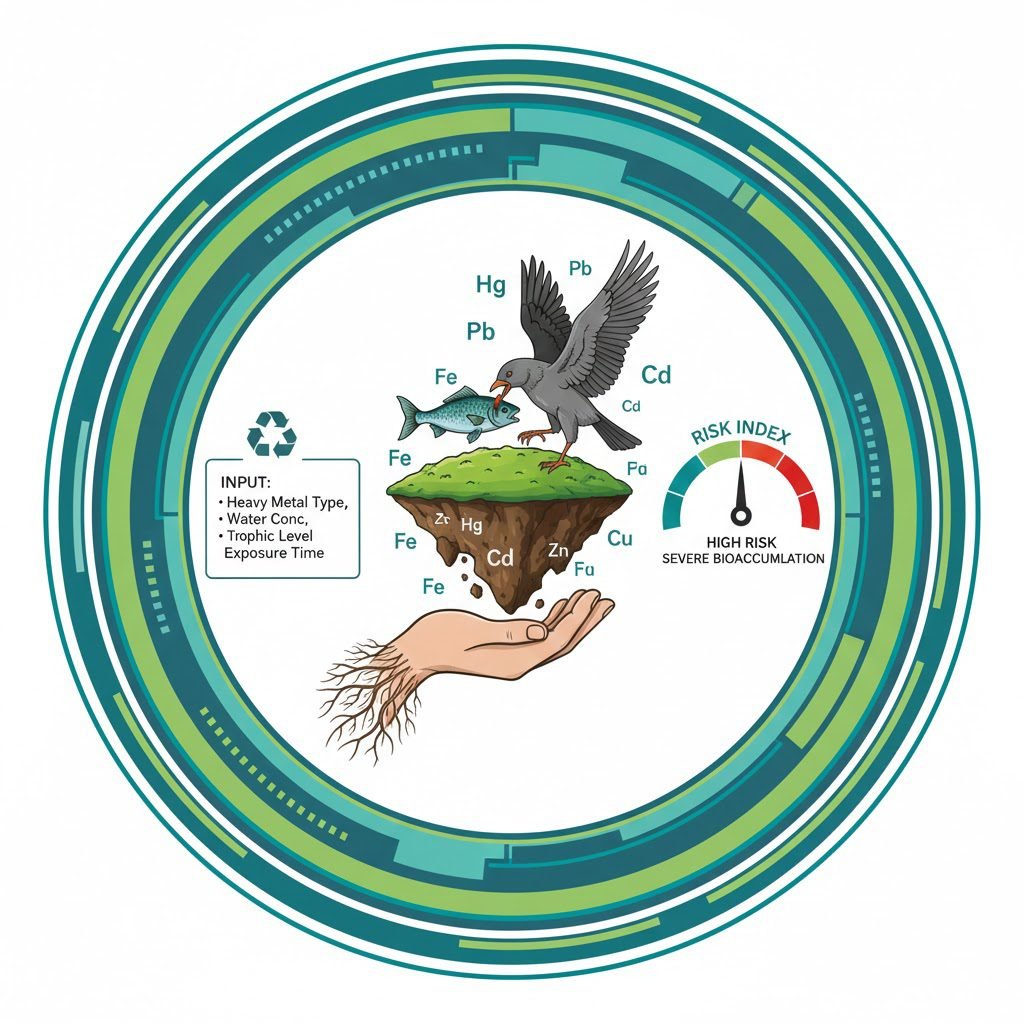
How the Heavy Metal Bioaccumulation Calculator Works
Our calculator estimates daily intake, compares it to tolerable intake limits, and predicts body burden over time. Here’s a breakdown:
Inputs You Provide
-
Heavy Metal Type: Lead, Mercury, Cadmium, or Arsenic.
-
Daily Intake (µg/day): Amount you consume via food, water, or air.
-
Body Weight (kg): Used to normalize intake per kilogram.
-
Exposure Duration (years): Total years of chronic exposure.
-
Source Type: Food, water, air, or a mixed combination.
Key Calculations
-
Daily Intake per kg Body Weight:
Example: Eating 15 µg/day of lead for a 70 kg person:
-
Comparison to Tolerable Daily Intake:
Each metal has a reference intake based on WHO/FAO guidelines:
| Metal | Tolerable Daily Intake (µg/kg/day) |
|---|---|
| Lead | 3.57 |
| Mercury | 0.57 |
| Cadmium | 1 |
| Arsenic | 2.14 |
Ratio Calculation:
This ratio indicates whether your intake is below, approaching, or exceeding safe limits.
-
Accumulation Factor Using Half-Life:
Where halfLife is the approximate elimination half-life for each metal.
-
Lead ~10 years
-
Mercury (methyl) ~0.16 years (~2 months)
-
Cadmium ~20 years
-
Arsenic ~0.003 years (days)
-
Estimated Body Burden Increase (mg):
This gives an approximate total accumulation in milligrams over your exposure period.
Outputs You See
-
Daily intake per kg
-
Intake vs tolerable limit (%)
-
Risk level: Low, Moderate, High
-
Overall assessment: Acceptable or Action Recommended
-
Practical advice for reducing exposure
Step-by-Step Example Scenarios
Example 1: Lead Exposure from Drinking Water
-
Daily Intake: 20 µg/day
-
Body Weight: 70 kg
-
Exposure Duration: 10 years
-
Source: Water
Calculation:
Result: Low risk. Accumulation over 10 years is limited but regular testing is still advised.
Example 2: Mercury in Fish
-
Daily Intake: 50 µg/day
-
Body Weight: 60 kg
-
Exposure Duration: 5 years
-
Source: Food
Result: Moderate risk. Mercury bioaccumulates quickly; consider reducing fish intake or choosing low-mercury species.
Example 3: Cadmium from Rice
-
Daily Intake: 10 µg/day
-
Body Weight: 65 kg
-
Exposure Duration: 20 years
-
Source: Food
Result: Low risk, but long-term monitoring is recommended as cadmium accumulates in kidneys over decades.
Why This Tool Matters
-
Personalized Exposure Insight: Tailored calculations based on your body weight, diet, and environment.
-
Risk Awareness: Understand whether you are approaching or exceeding safe limits.
-
Health Protection: Enables proactive decisions like switching water sources, testing for metals, or moderating certain foods.
By trying different scenarios, you can see how lifestyle choices impact long-term heavy metal accumulation.
Practical Tips to Reduce Bioaccumulation
-
Diversify your diet: Limit foods prone to contamination.
-
Use filtered water: Especially for lead and arsenic.
-
Test your environment: Soil, water, and air tests provide actionable insights.
-
Support detoxification: Adequate nutrition, chelation therapy if prescribed.
-
Monitor exposure over time: Blood, urine, or hair analysis.
Related Tools for Environmental & Health Safety
-
Check Greywater Reuse Calculator to understand water contamination risks.
-
Use Rainwater Harvesting Potential Calculator for sustainable water sourcing.
-
Explore Solvent Evaporation Rate Calculator for workplace chemical exposure considerations.
-
Browse Environmental Chemistry Calculators for more related tools.
Frequently Asked Questions (FAQs)
Q1: Can this calculator predict exact blood levels?
No. This is an estimate of potential bioaccumulation based on intake. Clinical testing is needed for precise body burden measurements.
Q2: How reliable are half-life estimates?
They are approximations derived from scientific studies. Actual elimination varies by individual metabolism, age, and overall health.
Q3: Can bioaccumulation be reversed?
Some metals like mercury can be reduced through diet or medical interventions. Others, like cadmium or lead, may persist for decades, so prevention is key.
Conclusion
The Heavy Metal Bioaccumulation Calculator is a practical, science-backed tool to assess your long-term exposure risk. By understanding daily intake, accumulation potential, and tolerable limits, you can make informed health decisions and minimize the impact of environmental contaminants.
Try different scenarios with your diet, water, or lifestyle choices to see how minor changes can significantly reduce your heavy metal load. Stay proactive—your long-term health depends on it.
Meta Description:
Estimate heavy metal accumulation and risk with the Heavy Metal Bioaccumulation Calculator. Protect health with personalized insights today.