How to Develop Photocatalysts for Water Purification
How to Develop Photocatalysts for Water Purification
Water pollution is one of the most pressing environmental challenges of our time. From industrial wastewater to agricultural runoff, harmful chemicals and microorganisms contaminate freshwater sources, threatening ecosystems and human health. How to develop photocatalysts for water purification is a question that scientists, engineers, and environmentalists grapple with daily. By understanding the design, preparation, and application of photocatalytic materials, we can harness light energy to remove pollutants effectively, offering a sustainable and cost-efficient solution.
Photocatalysis, in simple terms, involves a material that absorbs light and triggers chemical reactions to break down contaminants. Imagine pouring dirty water into a transparent tank exposed to sunlight and watching pollutants degrade without adding harsh chemicals—that is the power of photocatalysts in action. In this guide, we will explore step-by-step how to develop photocatalysts, practical applications, experimental examples, and calculations to help you implement or understand this technology.
Introduction to Photocatalysts
Photocatalysis is a process in which a semiconductor material absorbs light energy to accelerate chemical reactions. The resulting reactions can degrade organic pollutants, disinfect water, and even remove heavy metals. Photocatalysts are critical in modern water purification systems because they are:
-
Sustainable: Utilize sunlight or artificial UV light without harmful by-products.
-
Efficient: Can degrade complex molecules faster than conventional treatment methods.
-
Reusable: Many photocatalysts remain stable for multiple cycles.
Water treatment using photocatalysts is particularly relevant in areas with limited access to advanced filtration systems. By understanding how to develop photocatalysts for water purification, engineers can design more efficient, low-cost solutions.
Types of Photocatalysts
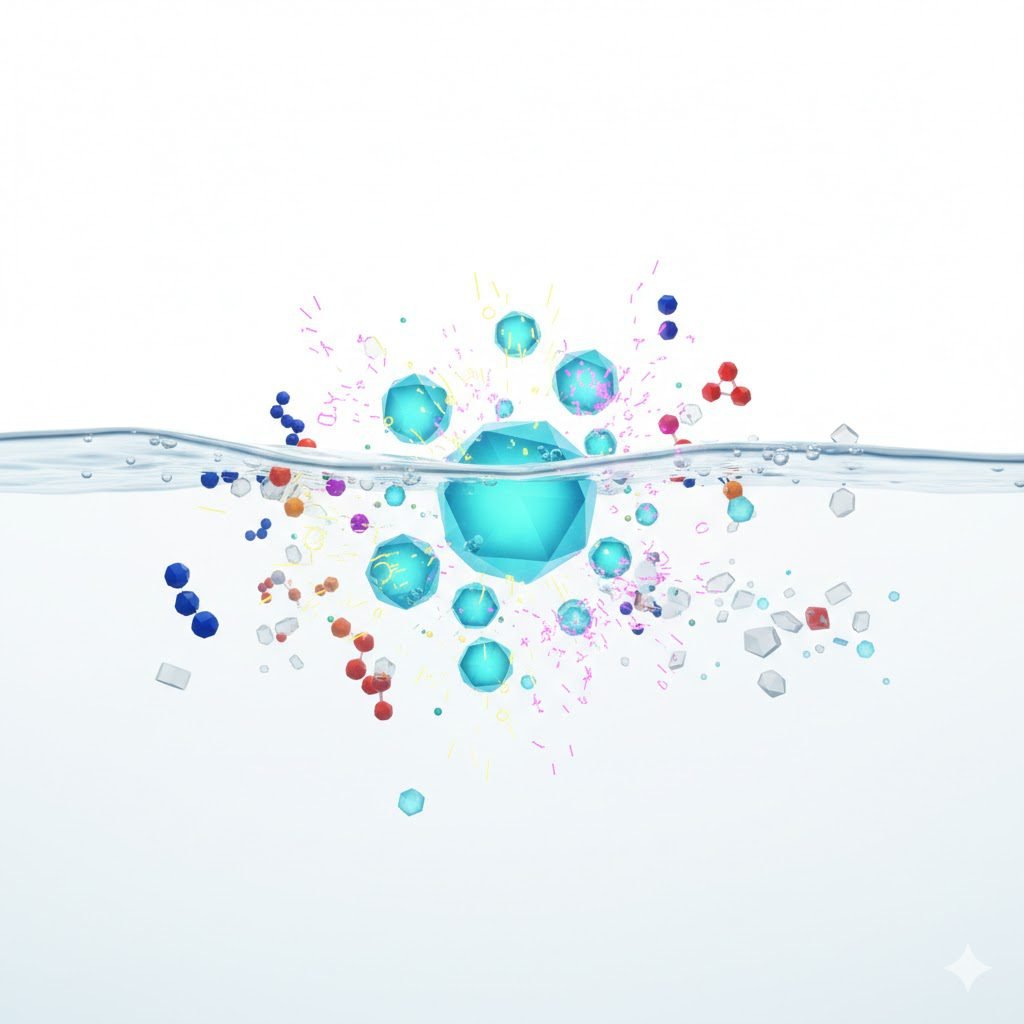
Photocatalysts are generally semiconductor-based, and their performance depends on light absorption, surface area, and charge separation efficiency. Common categories include:
Metal Oxide Photocatalysts
-
Titanium Dioxide (TiO₂): Highly stable, non-toxic, and widely used.
-
Zinc Oxide (ZnO): Excellent UV absorption but less stable in acidic conditions.
Metal Sulfides
-
Cadmium Sulfide (CdS): Efficient under visible light but can release toxic Cd²⁺ ions.
Composite and Doped Photocatalysts
-
Doping with metals or non-metals: Enhances visible light absorption.
-
Heterojunction structures: Combine two semiconductors for improved charge separation.
Emerging Materials
-
Graphitic Carbon Nitride (g-C₃N₄): Visible-light responsive and low-cost.
-
Metal-Organic Frameworks (MOFs): Highly porous materials for pollutant adsorption before degradation.
Key Materials and Preparation Methods
Developing a photocatalyst involves selecting the right material and optimizing its structure for maximum efficiency.
Common materials include:
-
Titanium or zinc precursors (like titanium isopropoxide)
-
Solvents: ethanol, water
-
Dopants: nitrogen, silver, or carbon-based compounds
-
Supports: silica, alumina, or graphene
Preparation methods:
-
Sol-Gel Method: Produces uniform nanoparticles by hydrolyzing metal alkoxides in a controlled environment.
-
Hydrothermal/Solvothermal Synthesis: Uses high temperature and pressure to control crystal size and shape.
-
Co-precipitation: Simple and scalable method for producing metal oxide photocatalysts.
-
Impregnation/Doping: Enhances visible light activity by introducing foreign elements.
Each method affects the surface area, crystallinity, and bandgap, directly impacting photocatalytic performance.
Step-by-Step Guide to Developing Photocatalysts
Here’s a practical framework for developing your photocatalyst:
Step 1: Choose the Target Pollutant
-
Organic dyes (methylene blue, rhodamine B)
-
Pharmaceuticals or pesticides
-
Heavy metals (Cr⁶⁺, Pb²⁺)
Step 2: Select the Material
-
For UV-light applications: TiO₂ or ZnO
-
For visible light: doped TiO₂, g-C₃N₄
Step 3: Synthesize the Photocatalyst
-
Follow methods like sol-gel, hydrothermal, or doping.
-
Control particle size to maximize surface area (10–50 nm is ideal).
Step 4: Characterize the Material
-
XRD (X-ray Diffraction): Confirms crystal structure
-
SEM/TEM: Determines particle morphology
-
UV-Vis Spectroscopy: Measures light absorption and bandgap
Learn more about characterizing nanomaterials
Step 5: Test Water Purification Efficiency
-
Add a known concentration of pollutant in water.
-
Expose to light source (UV or visible).
-
Measure degradation using spectrophotometry.
Step 6: Optimize Performance
-
Adjust pH, light intensity, and catalyst dosage.
-
Experiment with doping or composite structures for better efficiency.

Mechanisms and Chemistry Behind Photocatalysis
The fundamental steps in photocatalysis are:
-
Photon Absorption: Light energy excites electrons from the valence band to the conduction band.
-
Charge Separation: Generates electron-hole pairs.
-
Radical Formation: Electrons react with oxygen → superoxide radicals (•O₂⁻), holes react with water → hydroxyl radicals (•OH).
-
Pollutant Degradation: Radicals attack and break down organic molecules into harmless products like CO₂ and H₂O.
Example Equation for TiO₂:
Understanding this chemistry is crucial for designing photocatalysts that work efficiently under specific light conditions.
Practical Examples and Calculations
Example 1: Calculating Catalyst Dosage
If the degradation rate follows first-order kinetics:
Where:
-
C₀ = initial concentration (mg/L)
-
C = concentration after time t (mg/L)
-
k = reaction rate constant (min⁻¹)
-
t = time (minutes)
Scenario: Degrading 10 mg/L methylene blue using 0.5 g/L TiO₂ under UV light for 60 min, k = 0.03 min⁻¹.
Result: 83.5% of the pollutant is degraded.
Example 2: Optimizing Light Absorption
-
TiO₂ absorbs UV light (<387 nm)
-
To enhance visible light activity, nitrogen doping reduces bandgap from 3.2 eV → 2.8 eV
Example 3: Surface Area Consideration
-
Photocatalytic efficiency is proportional to surface area:
-
If surface area increases from 50 m²/g → 100 m²/g, reaction rate doubles (approx.)
This is why nanostructured catalysts outperform bulk materials.
Testing and Optimizing Performance
Key parameters for water purification:
-
Catalyst concentration: 0.1–1 g/L typical
-
pH of solution: affects radical formation
-
Light intensity: directly affects electron excitation
-
Temperature: moderate temperatures (~25–35°C) are ideal
Tip: Run multiple cycles to test reusability. A robust photocatalyst maintains >90% efficiency after 5 cycles.
Real-Life Applications in Water Purification
Photocatalysts are increasingly used in:
-
Industrial wastewater treatment: Textile and dye industries
-
Household water purification systems: Sunlight-driven portable units
-
Advanced oxidation processes: Removal of pharmaceuticals and pesticides
Case Study: A TiO₂-based photocatalyst removed 95% of methylene blue dye in textile effluent under UV irradiation in 2 hours. Such results show practical feasibility.
FAQs About
Q1: Can photocatalysts work under sunlight?
A: Yes, especially visible-light responsive photocatalysts like doped TiO₂ or g-C₃N₄. Sunlight provides both UV and visible spectra.
Q2: Are photocatalysts safe for drinking water?
A: Stable photocatalysts like TiO₂ are non-toxic, but heavy-metal-based photocatalysts (CdS) require careful handling and removal after treatment.
Q3: How long do photocatalysts last?
A: Many can be reused 5–10 cycles with minimal efficiency loss, but surface fouling can reduce activity over time.
Conclusion
Developing photocatalysts for water purification is a promising strategy for sustainable water treatment. By selecting the right materials, optimizing synthesis methods, and understanding the underlying chemistry, anyone can create efficient photocatalytic systems. Testing under real-life conditions and continuous optimization ensures maximum pollutant degradation.
Whether you are an environmental engineer, researcher, or hobbyist, applying these steps can help transform contaminated water into clean, safe water using light energy—a solution that’s eco-friendly, practical, and scientifically grounded.
Explore related resources on nanomaterial characterization and crystal structure analysis to deepen your expertise and experiment with photocatalyst design.