Kitchen Utensil Chemical Leaching Calculator
Kitchen Utensil Chemical Leaching Calculator
Estimate relative risk of chemical leaching (metals, coatings, plasticizers…) from kitchen utensils into food — awareness tool only.
Kitchen Utensil Chemical Leaching Calculator: Assessing Safety in Your Kitchen
Kitchen Utensil Chemical Leaching Calculator is a practical tool designed to help you understand the potential risks of chemicals leaching from cookware and utensils into your food. Every time you cook with aluminum, non-stick, or plastic utensils, trace amounts of metals, coatings, or plasticizers can migrate into meals, especially with high heat, acidic foods, or prolonged cooking.
Imagine preparing tomato sauce in an old scratched non-stick pan or storing citrus juice in aluminum containers overnight. Even small exposures over time can affect taste, nutrition, and long-term health. This calculator lets you estimate relative risk, empowering you to make informed decisions about what utensils to use and when.
Whether you are a home cook, health-conscious parent, or kitchen safety enthusiast, this tool provides realistic, practical guidance.
How the Calculator Works
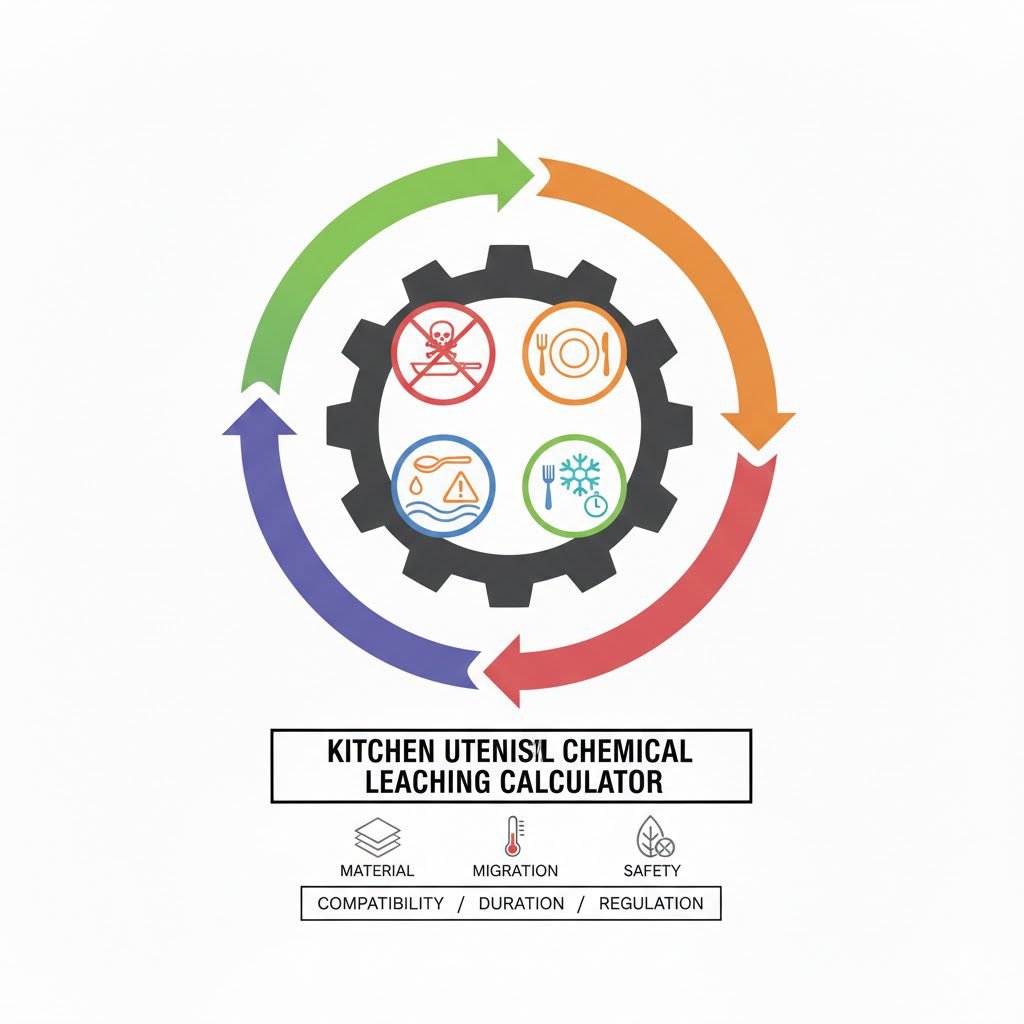
The calculator evaluates chemical leaching by combining five key factors:
-
Utensil Material / Type – Stainless steel, aluminum, cast iron, non-stick, silicone, glass, ceramic, melamine. Each material has a different leaching potential.
-
Food Type / Acidity – Neutral, mildly acidic, highly acidic, or fatty foods influence chemical migration.
-
Cooking / Contact Temperature – Room temperature, medium heat (<100°C), high heat (>180°C), or very high flame (>220°C).
-
Condition & Age of Utensil – New, lightly used, or heavily scratched/damaged. Old or scratched utensils leach more.
-
Contact Duration – Short (<30 min), medium (30 min–2 hours), or long (>2 hours or overnight).
Calculation Logic:
The tool uses a multiplicative risk formula to generate a numeric risk score:
-
Material, Food, Temp, Condition, Duration are assigned relative risk values (0.2–5.5).
-
Example: Using an old scratched non-stick pan (5.5) with acidic tomato sauce (2.8) at high heat (3.5) for 1 hour (1.5):
-
The calculator then interprets this numeric score into risk levels:
-
Very Low Risk (≤2.5)
-
Low Risk (≤6.0)
-
Moderate Risk – Caution (≤12.0)
-
High Risk – Better avoid (≤25.0)
-
Very High Risk – Replace (>25.0)
-
It also provides recommendations, such as “Prefer safer alternatives” or “Replace as soon as possible,” to make actionable decisions.
Step-by-Step Examples
Example 1: Safe Daily Use
-
Utensil: Food-grade stainless steel (0.2)
-
Food: Neutral (0.4)
-
Temp: Room temperature (0.5)
-
Condition: New (0.5)
-
Duration: Short (0.6)
-
Risk Level: Very Low Risk
-
Recommendation: Excellent choice — safe for daily use.
✅ Ideal for water bottles, lunchboxes, and everyday cooking.
Example 2: Moderate Risk Scenario
-
Utensil: Aluminum uncoated (1.8)
-
Food: Highly acidic (2.8)
-
Temp: High heat (3.5)
-
Condition: Old / scratched (4.0)
-
Duration: Medium (1.5)
-
Risk Level: High Risk – Better avoid
-
Recommendation: Limit acidic or high-heat cooking in old aluminum utensils.
⚠️ Avoid storing acidic leftovers in aluminum overnight.
Example 3: Non-stick Cookware Risk
-
Utensil: Old non-stick coating (5.5)
-
Food: Fatty / oily (1.8)
-
Temp: Frying / high heat (3.5)
-
Condition: Heavily scratched (4.0)
-
Duration: Long (>2 hours, 3.0)
-
Risk Level: Very High Risk – Replace
-
Recommendation: Replace immediately. Non-stick flakes in food can be hazardous.
⚠️ Example shows why regular pan inspection is essential for safety.
Practical Guidelines for Safe Utensil Use
-
Stainless steel 18/10 and food-grade silicone are safest for daily use.
-
Avoid scratched or peeling non-stick surfaces with acidic or high-heat foods.
-
Old aluminum should never touch acidic foods.
-
Well-seasoned cast iron is safe but acidic foods can strip the seasoning.
-
Melamine or low-grade plastics → avoid heat and long food contact.
-
When in doubt, use glass, ceramic (lead-free), or high-quality stainless steel.
For related assessments, check these tools:
FAQs
1. Does the calculator replace lab testing?
No, it provides an awareness-level estimation. Actual leaching depends on multiple factors, including recipe chemistry, cookware brand, and duration.
2. Can acidic foods really increase chemical leaching?
Yes. Foods like tomatoes, citrus, or vinegar react with metals or coatings, increasing migration into food.
3. How often should I replace cookware?
Inspect frequently. Replace non-stick pans showing scratches or peeling, aluminum containers in contact with acidic foods, and any utensil with worn coatings.
Why You Should Use This Calculator
Using the Kitchen Utensil Chemical Leaching Calculator:
-
Empowers health-conscious cooking decisions
-
Helps prevent long-term chemical exposure
-
Guides selection of safer utensils
-
Encourages scenario testing, e.g., “What if I fry acidic sauce in old aluminum?”
💡 Tip: Experiment with different combinations of materials, foods, and temperatures to learn which utensils are safest for everyday cooking.
Conclusion
Chemical leaching from kitchen utensils is a subtle but real concern. By calculating risk scores and following recommendations, you can protect your health and make better choices in the kitchen. Whether it’s switching to high-quality stainless steel, using food-grade silicone, or replacing worn non-stick cookware, the Kitchen Utensil Chemical Leaching Calculator is your practical guide for safer cooking.
Explore related tools for chemical exposure insights in clothing, home paint, and even car materials to expand your knowledge of everyday safety. Start testing your utensils today — small changes can make a big difference in long-term health.