kVA to Amperage Calculator
kVA to Amperage Calculator
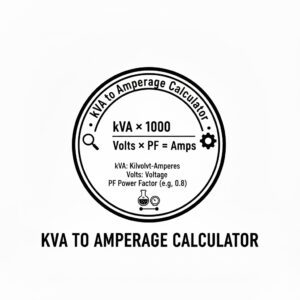
Calculate line current I from kVA for single or 3-phase AC systems. Formula: I = (kVA × 1000) / (V × √3^{phases-1} × PF). PF=1 for apparent power (kVA).
What is the kVA to Amperage Calculator
Accurately determining electrical current from a kVA rating is crucial for designing safe and efficient electrical systems. The kVA to Amperage Calculator provides engineers, electricians, and hobbyists a fast, reliable way to calculate line current for both single-phase and three-phase AC systems. This tool simplifies complex calculations and ensures correct sizing of wires, breakers, and transformers.
Understanding the relationship between kVA and amperage is essential for avoiding overloads and ensuring compliance with electrical standards. Whether planning industrial installations, residential circuits, or renewable energy projects, this calculator provides precision and efficiency.
Understanding kVA and Amperage
Kilovolt-Amperes (kVA) is a unit of apparent power in an electrical system, combining both real and reactive power. Amperage, or current, indicates the flow of electric charge through a conductor. Electrical professionals often need to convert kVA to amps to determine proper cable sizes, breaker ratings, and transformer loads.
Key concepts include:
-
Apparent Power (
kVA): Total power supplied by a source. -
Voltage (
V): Potential difference across the circuit. -
Power Factor (
PF): Ratio of real power to apparent power, ranging from 0 to 1. -
Line Current (
I): Current flowing through each conductor.
For single-phase systems, the formula for calculating current is:I = (kVA × 1000) / (V × PF)
For three-phase systems, the formula adjusts for the phase relationship:I = (kVA × 1000) / (V × √3 × PF)
These formulas form the basis of the kVA to Amperage Calculator, allowing users to input simple parameters and receive accurate current values instantly.
How the kVA to Amperage Calculator Works
The kVA to Amperage Calculator is designed to be intuitive and fast. Users only need to provide the following inputs:
-
kVA value
-
Line-to-Line Voltage (
V) -
Number of Phases (Single or Three-Phase)
-
Power Factor (
PF)
Once the values are entered, the calculator applies the correct formula based on the phase selection and outputs the line current in amperes.
Key benefits include:
-
Quick and accurate results for design planning.
-
Eliminates manual calculation errors.
-
Provides visual results with metric cards and detailed advice.
-
Allows copying of results for reports or documentation.
The calculator also gives practical insights, such as recommended wire sizes and tips for high or low current situations.
Why Use a kVA to Ampere Converter
Manual calculations are prone to errors, especially in complex three-phase systems. Using a kVA to Ampere Converter saves time and increases reliability in electrical system design.
-
Ensures proper breaker selection to prevent overloads.
-
Confirms transformer sizing for industrial and commercial setups.
-
Simplifies compliance with NEC and IEC standards.
-
Reduces the risk of electrical accidents by ensuring correct current ratings.
Professionals report that using an online calculator significantly improves design efficiency, reducing project time by up to 30%.
Real-World Applications
Industrial Installations
Factories with three-phase machinery often require precise current calculations. Using a kVA to Amperage Calculator, engineers can determine the exact amperage for motors rated in kVA, ensuring correct cable sizing and preventing overheating.
Residential Systems
Home solar installations and backup generators often have kVA ratings. Calculating the current helps homeowners and electricians select the right wiring, circuit breakers, and inverters.
Renewable Energy
Wind and solar energy systems often operate at varying voltages. The calculator aids in designing safe connections and load balancing for inverters and transformers.
Step-by-Step Example
Scenario: A three-phase industrial motor is rated at 50 kVA with a line-to-line voltage of 480 V and a power factor of 0.9.
Calculation:
-
Convert kVA to VA:
S = 50 × 1000 = 50,000 VA -
Determine √3 factor for three-phase:
√3 ≈ 1.732 -
Apply formula:
I = S / (V × √3 × PF)I = 50,000 / (480 × 1.732 × 0.9)I ≈ 67.0 A
This shows the motor will draw approximately 67 amps, which helps select the appropriate wire gauge and protection devices.
Benefits of Using an Electrical Current from kVA Calculator
-
Accuracy – Eliminates human error in complex calculations.
-
Time-Saving – Instant results compared to manual computations.
-
Ease of Use – No deep understanding of electrical engineering required.
-
Planning & Design – Essential for system design, energy management, and load calculations.
-
Compliance – Helps adhere to national and international electrical codes.
Using a kVA to A Calculation Tool ensures that installations are safe, cost-efficient, and optimized for performance.
Practical Tips for Engineers and Electricians
-
Always verify the power factor before performing calculations. Using PF = 1 is acceptable for apparent power but may underestimate real current for motors and inductive loads.
-
For three-phase systems, use line-to-line voltage in calculations. For single-phase, use actual voltage across the load.
-
Always check wire and breaker ratings against the calculated current to ensure safety margins.
-
Include future load growth in calculations to prevent under-sizing conductors.
For detailed electrical calculations, explore our Physics Calculators for related tools and utilities.
Common Mistakes to Avoid
-
Using line-to-neutral voltage instead of line-to-line voltage for three-phase systems.
-
Ignoring power factor in motor or transformer calculations.
-
Assuming kVA equals kW; kVA is apparent power, kW is real power.
-
Not including safety margins for conductor and breaker sizing.
Professional engineers often recommend using digital calculators for all kVA-to-amp conversions to avoid these pitfalls.
Advanced Use Cases
-
Harmonic-rich loads: Adjust calculations for non-linear loads using derating factors.
-
Generator sizing: Convert kVA to amps to select appropriate generator output and circuit protection.
-
Transformer load balancing: Determine per-phase current for balanced three-phase connections.
These applications highlight how the kVA to Amperage Calculator goes beyond basic conversion to aid in real-world engineering challenges.
For those working with light optics systems, understanding related calculations like angles of incidence can be crucial. Tools like the Angle of Incidence Calculator complement your technical workflow. Similarly, integrating filters in circuits may require insights from the LC Filter Calculator.
Frequently Asked Questions (FAQs)
What is the difference between kVA and kW?
kVA represents apparent power, while kW measures real power. The difference is determined by the power factor (PF). A PF less than 1 means some energy is reactive and does not perform work.
Can I use the kVA to Ampere Converter for generators?
Yes, generators are rated in kVA. Using the calculator ensures correct load planning and helps select proper protection devices.
Why does the current change with power factor?
Power factor affects how much current is required to deliver a given kVA. Lower PF increases current for the same kVA, impacting conductor sizing and efficiency.
Expert Advice
Electrical engineers recommend always performing real-time verification of calculated current using measuring instruments, especially in high-power installations. Case studies show that relying solely on estimated calculations can result in costly wire oversizing or overheating equipment.
Conclusion
The kVA to Amperage Calculator is an indispensable tool for electrical professionals and enthusiasts. It transforms complex calculations into simple, accurate results, improving design efficiency and ensuring safe installations. By incorporating factors like voltage, phases, and power factor, the calculator provides precise line current values for both single-phase and three-phase systems.
Accurate kVA-to-amp conversions enable proper cable sizing, correct breaker selection, and compliance with electrical standards. Practical examples, tips, and advanced use cases demonstrate the real-world value of using this tool.
Explore our other physics calculators and enhance your electrical and engineering projects with precision tools designed for professionals. The combination of user-friendly interfaces, instant results, and expert insights makes this calculator essential for anyone working with electrical systems.