
MoSCoW Method Task Splitter
MoSCoW Method Task Splitter
Split and prioritize your tasks using the globally recognized MoSCoW method (Must Have • Should Have • Could Have • Won't Have). Perfect for projects, product development, daily planning, and works seamlessly with the Eisenhower Matrix.
How to Prioritize Your Tasks Effectively?
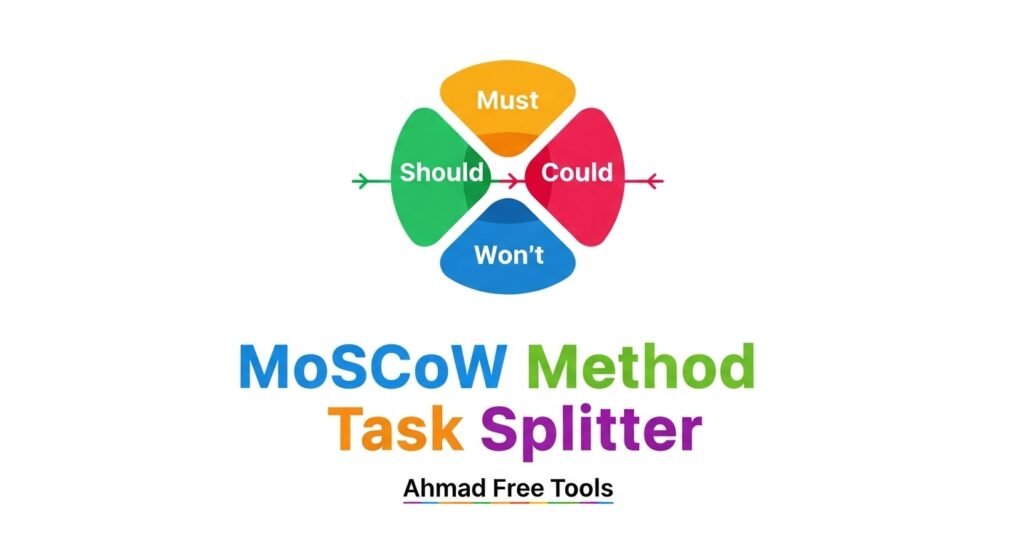
The MoSCoW Method Task Splitter is a practical tool that helps you organize and prioritize tasks based on their importance. Imagine you are managing a project with limited time and resources, and every team member is juggling multiple responsibilities. Without clarity, you risk missing deadlines, focusing on less critical tasks, or burning out your team. This is where the MoSCoW method becomes invaluable. It classifies tasks into four categories: Must Have, Should Have, Could Have, and Won’t Have, ensuring that the most critical items receive immediate attention while less urgent tasks are scheduled appropriately. Using this approach can transform chaotic task lists into a structured, actionable plan.
How Does the MoSCoW Method Task Splitter Work?
The tool works by letting you input tasks and assign them to one of the four MoSCoW categories. Each task is tracked with a unique identifier, allowing for easy updates, reclassification, or deletion. The tool then generates a prioritized execution list, showing which tasks should be completed first. Additionally, summary metrics provide a clear view of the total number of tasks per category and recommend the focus area, typically the sum of Must and Should tasks.
The MoSCoW Task Splitter is intuitive:
- Enter your task description.
- Select the relevant category based on importance.
- Click “Add Task” to see it appear in the corresponding column.
- Update or remove tasks as needed.
- Review the prioritized list and summary metrics to guide your workflow.
For project managers, using this tool alongside the ABC Task Priority Ranker can further enhance task evaluation and decision-making.
What Are the Four Categories in MoSCoW and How Should You Apply Them?
Understanding each category is key to effective prioritization:
- Must Have: Non-negotiable tasks critical to success. Example: integrating a payment system for an e-commerce site.
- Should Have: Important but not essential; can be scheduled after Must Haves. Example: creating an analytics dashboard.
- Could Have: Optional enhancements if time and resources allow. Example: adding multi-language support.
- Won’t Have: Tasks explicitly excluded from the current scope. Example: implementing advanced AI recommendations not planned for this phase.
Applying this framework ensures that resources are focused where they matter most, preventing delays and wasted effort. You can even combine it with the Warren Buffett 25-5 Goal Calculator to identify which critical goals should truly receive attention.
How Can You Use the Tool for Real-Life Projects?
Here are three practical scenarios:
- Software Development: Prioritize features in a sprint. Must Have features are developed first, Should Have features next, and Could Have features added if time permits. Won’t Have features are deferred to later releases.
- Daily Planning: Split your personal tasks. Must Have could be paying bills or attending meetings, Should Have could be replying to emails, and Could Have could be reading industry articles.
- Product Launch: Organize launch tasks. Must Have tasks include finalizing the product and marketing plan, Should Have tasks include secondary campaigns, and Could Have tasks include optional graphics or extra content.
Testing different scenarios in the Ivy Lee Method Calculator alongside the MoSCoW splitter helps in identifying bottlenecks and optimizing daily workflows.
How Does the Tool Calculate Priorities and Metrics?
The MoSCoW Task Splitter tracks each task with its category. It automatically calculates:
- Total tasks per category
- Recommended focus area (Must + Should tasks)
- A prioritized execution list from most to least critical tasks
This approach ensures that your project or day is structured logically, avoiding overlooked priorities. For team projects, sharing the generated list can improve accountability and transparency.
Can This Tool Be Combined with Other Productivity Tools?
Yes. For example:
- Integrate with the Daily Time Block Builder to allocate exact time slots for high-priority tasks.
- Pair with the Warren Buffett 25-5 Goal Calculator for strategic goal selection.
- Use alongside the Most Important Task Calculator to identify top daily priorities.
Combining these tools strengthens focus, enhances efficiency, and reduces decision fatigue.
Frequently Asked Questions
1. Can I change a task category after adding it?
Yes, each task has a dropdown menu to move it between Must, Should, Could, and Won’t categories. Changes update automatically in the summary and prioritized list.
2. What if I have too many tasks in one category?
Focus first on Must Have tasks. Then gradually move to Should Have and Could Have tasks. Using the prioritization summary helps you allocate resources efficiently.
3. Can I export or share my task list?
Yes, the tool has a “Copy Prioritization Summary” button, which creates a clean text version of tasks categorized and ordered for easy sharing or documentation.
Conclusion
The MoSCoW Method Task Splitter is a versatile, practical tool for managing projects, daily tasks, and personal productivity. By clearly separating tasks into Must, Should, Could, and Won’t categories, you can focus your energy where it counts most. Pairing this tool with other productivity calculators, such as the ABC Task Priority Ranker or Ivy Lee Method Calculator, ensures maximum efficiency and clarity. Use it daily to transform chaotic task lists into actionable plans and maintain control over your priorities.