
Value vs Effort Matrix Tool
Value vs Effort Matrix Tool
Advanced prioritization framework based on the Eisenhower Matrix system. Plot tasks by Value (impact/benefit, 1–10) versus Effort (time/resources, 1–10) to instantly see what to do first, schedule, fill in, or avoid.
How to Prioritize Tasks for Maximum Impact?
When your to-do list keeps growing and everything feels urgent, knowing what to tackle first can feel impossible. The Value vs Effort Matrix Tool helps you solve this problem by turning subjective task planning into a clear, data-driven approach. By evaluating each task based on its potential impact versus the resources or time it requires, this tool allows you to prioritize effectively and focus on what truly moves the needle.
What is a Value vs Effort Matrix and Why Should You Use It?
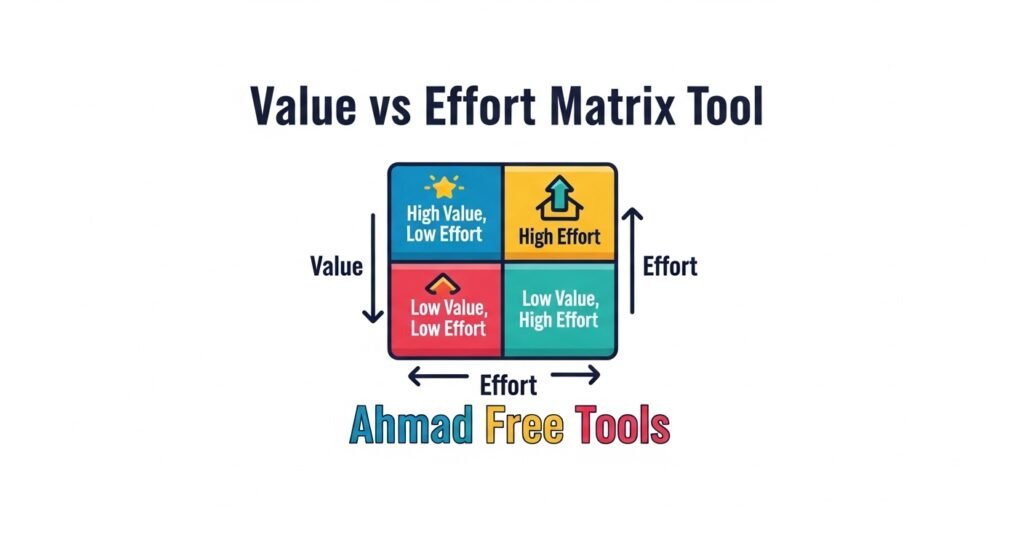
The Value vs Effort Matrix is a simple yet powerful framework to organize tasks into four categories. Each task is assessed on two axes: Value, representing the benefit or impact of completing the task, and Effort, representing the resources, time, or complexity involved. By plotting tasks on this grid, you instantly see which activities deserve your attention and which can be delegated, postponed, or eliminated.
Using this tool, you can:
- Identify Quick Wins: High value, low effort tasks that deliver immediate results.
- Plan Major Projects: High value but high effort tasks requiring structured scheduling.
- Manage Fill-ins: Low value, low effort tasks to tackle when you have extra capacity.
- Avoid Time Sinks: Low value, high effort tasks that drain resources without meaningful results.
This structured approach ensures you spend your time where it matters most, improving both productivity and strategic focus.
How Does the Value vs Effort Matrix Tool Work?
The tool is designed for simplicity while offering actionable insights. Here’s how it works:
- Input Tasks: Enter the task name and assign a Value (1–10) and Effort (1–10). Higher numbers indicate more importance or more effort.
- Add Task: Each task is added to your personal list, showing value and effort at a glance. You can remove tasks as priorities change.
- Matrix Classification: The tool automatically sorts tasks into one of four quadrants using this logic:
- Quick Wins: Value ≥6, Effort ≤5
- Major Projects: Value ≥6, Effort >5
- Fill-ins: Value <6, Effort ≤5
- Avoid: Value <6, Effort >5
- Results Overview: The matrix visually shows where each task falls, while a summary section provides total task count and strategic advice.
- Analysis & Copying: You can copy the full matrix analysis to use in reports or planning sessions, ensuring you can share priorities with your team efficiently.
For example, using this tool along with the ABC Task Priority Ranker allows you to cross-check priority scores for critical projects.
Step-by-Step Examples of Task Prioritization
Example 1: Quick Wins
- Task: Respond to client emails
- Value: 7, Effort: 2
This task falls into the Quick Wins quadrant. Completing it immediately increases client satisfaction with minimal effort.
Example 2: Major Project
- Task: Launch product update
- Value: 9, Effort: 7
Although high impact, this task requires planning and dedicated time. Schedule it in your calendar rather than attempting to complete it alongside daily tasks.
Example 3: Fill-ins
- Task: Organize office files
- Value: 4, Effort: 3
Low value but quick to complete, this is ideal for spare time.
Example 4: Avoid
- Task: Update internal formatting documents
- Value: 3, Effort: 8
High effort, low impact. Consider delegating or removing this task entirely.
Using the tool, you can adjust Value and Effort scores to test different scenarios. This flexibility helps you reassess priorities as projects evolve, similar to how the Warren Buffett 25-5 Goal Calculator helps refine focus on the most critical goals.
How Can This Tool Improve Daily Productivity?
The Value vs Effort Matrix Tool gives actionable clarity by removing guesswork. Its benefits include:
- Focused Decision-Making: Quickly identify which tasks deliver the most results with the least input.
- Time Optimization: Allocate resources strategically, reducing wasted effort on low-impact activities.
- Team Alignment: Shared matrix views help teams coordinate priorities efficiently.
- Regular Review: Adjusting scores weekly ensures the tool reflects changing business priorities.
It pairs well with the Ivy Lee Method Calculator to structure daily focus around top-impact tasks, creating a comprehensive productivity workflow.
Frequently Asked Questions
1. Can I use this tool for personal tasks, not just work projects?
Absolutely. Whether planning home renovations, fitness routines, or study schedules, evaluating tasks by value versus effort ensures you invest time where it matters most.
2. How often should I update the Value and Effort scores?
Weekly reviews are recommended. As priorities and available resources change, rescoring tasks keeps your matrix accurate and actionable.
3. Can I combine this with other prioritization methods?
Yes. Many users combine it with methods like the Most Important Task Calculator to ensure top-impact tasks are executed first while maintaining a visual overview.
Conclusion
The Value vs Effort Matrix Tool is more than just a planning framework; it is a practical system to focus your energy on tasks that truly matter. By classifying activities into Quick Wins, Major Projects, Fill-ins, and Avoid, you gain clarity, improve productivity, and make smarter decisions. Testing different task scenarios and adjusting scores regularly ensures the matrix remains relevant to your goals. Start using the tool today and combine it with related productivity tools to maximize results with less effort.