Roast Temperature Guide
Roast Temperature Guide
Get perfect doneness for your roast every time – choose meat type and desired doneness for recommended oven temps, internal target temps, approximate times, and rest instructions.
How to Achieve Perfect Doneness Every Time
Cooking a roast to perfection can feel like chasing a moving target. You don’t want dry, overcooked meat, but undercooked roasts are unsafe and unappetizing. That’s where the Roast Temperature Guide comes in. This tool helps home cooks and professional chefs alike determine the ideal oven temperature, internal target temperature, and cooking time based on meat type, weight, and desired doneness. Whether you’re roasting beef, pork, lamb, veal, or poultry, this guide makes sure every slice is juicy, tender, and safe.
What Makes a Roast Temperature Guide Essential?
Many home cooks rely on guesswork when roasting meat. Over the years, culinary experts have identified that precise temperatures and timing are critical for flavor, texture, and safety. For example:
-
Beef tastes best when medium-rare at 57–60°C (135–140°F).
-
Poultry must always reach at least 74°C (165°F) to prevent foodborne illness.
-
Pork is safe at 63°C but achieves better texture when rested.
By using a structured guide, you eliminate the guesswork and ensure a consistent result, even when cooking different meats or adjusting for weight.
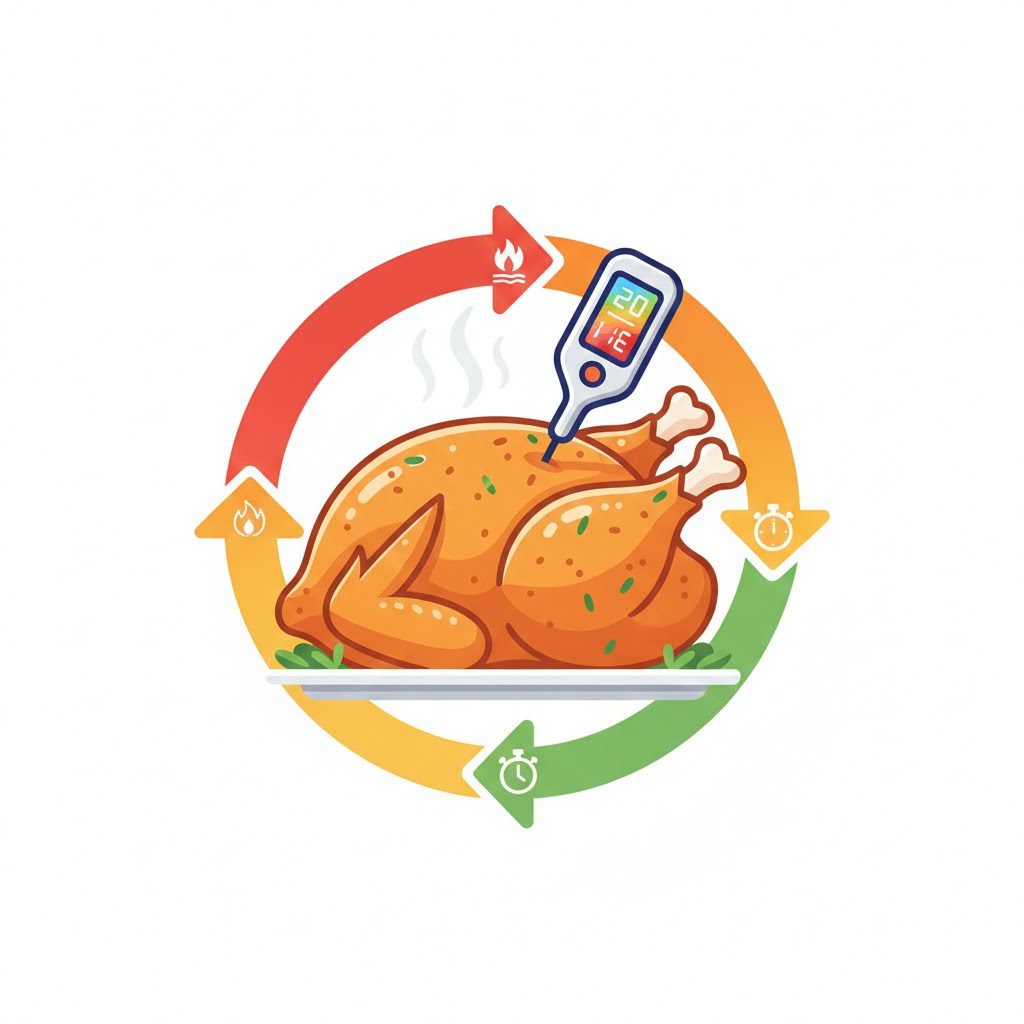
How Does the Roast Temperature Guide Work?
The tool works by combining several factors: meat type, doneness, and roast weight. Here’s the logic in simple terms:
-
Select Meat Type – Options include beef, pork, lamb, veal, and whole poultry. Each meat has its recommended oven temperature and internal target range based on USDA and global food safety standards.
-
Choose Desired Doneness – Ranges from rare to well-done. For poultry and pork, unsafe lower doneness options automatically default to a safe internal temperature.
-
Enter Roast Weight – The tool calculates approximate roasting time per kilogram. For example, a 2 kg beef roast at medium-rare requires roughly 80 minutes at 200°C (392°F).
-
Outputs – The tool provides:
-
Oven temperature (°C/°F)
-
Target internal temperature (°C/°F)
-
Approximate cooking time
-
Recommended rest time (15–30 minutes)
-
The calculation formula is straightforward:
This ensures a predictable, repeatable roast every time.
What Are the Recommended Temperatures for Different Meats?
Here’s a concise overview of common roasting temperatures:
-
Beef (roast / tenderloin / prime rib) – Oven: 200°C (392°F), Internal: 52–74°C depending on doneness.
-
Pork (loin / shoulder / tenderloin) – Oven: 190°C (374°F), Internal: 63–71°C (medium to well-done).
-
Lamb (leg / rack / shoulder) – Oven: 190°C (374°F), Internal: 52–74°C.
-
Chicken / Turkey – Oven: 180°C (356°F), Internal: 74°C minimum.
-
Veal (roast / loin) – Oven: 190°C (374°F), Internal: 52–74°C.
These temperatures balance food safety and flavor, ensuring that meat remains tender while reaching the correct doneness.
How Do I Calculate Roasting Time for My Meat?
Roasting time depends primarily on weight and type. Here’s how to estimate it:
-
Identify your meat type – Different meats have different time-per-kilogram standards:
-
Beef: 40 min/kg
-
Pork: 50 min/kg
-
Lamb: 45 min/kg
-
Chicken: 60 min/kg
-
Veal: 45 min/kg
-
-
Multiply weight by the factor – For a 2.5 kg lamb roast:
-
Adjust for bone-in or boneless – Bone-in roasts may require an extra 5–10 minutes per kg.
The guide automatically handles these calculations and provides easy-to-read results, including hours and minutes.
Why Resting Your Roast Matters
Resting is not optional; it’s essential. After removing a roast from the oven:
-
Juices redistribute throughout the meat.
-
Internal temperature rises by 3–5°C (5–9°F), finishing the cooking process gently.
-
Resting 15–30 minutes under a foil tent ensures a moist and flavorful roast.
Skipping this step can lead to a dry, unevenly cooked roast, no matter how perfect your oven temperature was.
Can I Customize the Roast Guide for Different Scenarios?
Absolutely. The tool encourages experimentation:
-
Vary Weight – Input different roast sizes to see adjusted times.
-
Change Doneness – Test medium vs. medium-rare results for texture comparison.
-
Try Different Meats – Explore how oven temperature and resting time affect flavor.
By testing different inputs, you’ll learn how each variable affects the final roast, giving you confidence to cook without relying on recipes alone.
Practical Example Scenarios
Example 1: Medium-Rare Beef Roast, 2 kg
-
Oven Temperature: 200°C (392°F)
-
Internal Target: 57°C (135°F)
-
Approximate Time: 1 hr 20 min
-
Rest: 20 min
Example 2: Whole Chicken, 2.5 kg
-
Oven Temperature: 180°C (356°F)
-
Internal Target: 74°C (165°F)
-
Approximate Time: 2 hr 30 min
-
Rest: 15–20 min
Example 3: Pork Loin, 1.8 kg, Medium
-
Oven Temperature: 190°C (374°F)
-
Internal Target: 63°C (145°F)
-
Approximate Time: 1 hr 30 min
-
Rest: 15 min
These examples demonstrate how the Roast Temperature Guide adapts to different meats and weights, ensuring reliable results every time.
Frequently Asked Questions
1. Can I use this guide for frozen roasts?
It’s best to thaw meat fully before roasting. Frozen meat alters cooking time and can lead to uneven doneness.
2. Does resting really make a difference?
Yes. Resting allows juices to redistribute. Skipping rest may cause dry meat, even if cooked perfectly.
3. Can I adjust the oven temperature for faster cooking?
Higher temperatures may reduce time but risk overcooked exterior and undercooked interior. Stick close to recommended temps for the best results.
Why Use the Roast Temperature Guide Tool?
The guide combines experience, food science, and practical logic. Instead of relying on rough estimates, it provides:
-
Accurate oven temperatures and internal target temps.
-
Precise cooking time per weight and meat type.
-
Clear guidance for safe and flavorful results.
For more precision cooking, you can explore related tools like the Stock Strength Indicator or Sauce Emulsification Calculator, which complement kitchen efficiency.
Trying the tool not only saves time but also builds confidence in the kitchen. By following its recommendations, you’re practicing safe, professional-grade roasting at home.