Sunlight Material Aging Calculator
Sunlight Material Aging Calculator
Enter exposure details and material type to estimate aging effects and lifespan under global sunlight conditions.
Sunlight Material Aging Calculator: Estimate Material Lifespan Under Sun Exposure
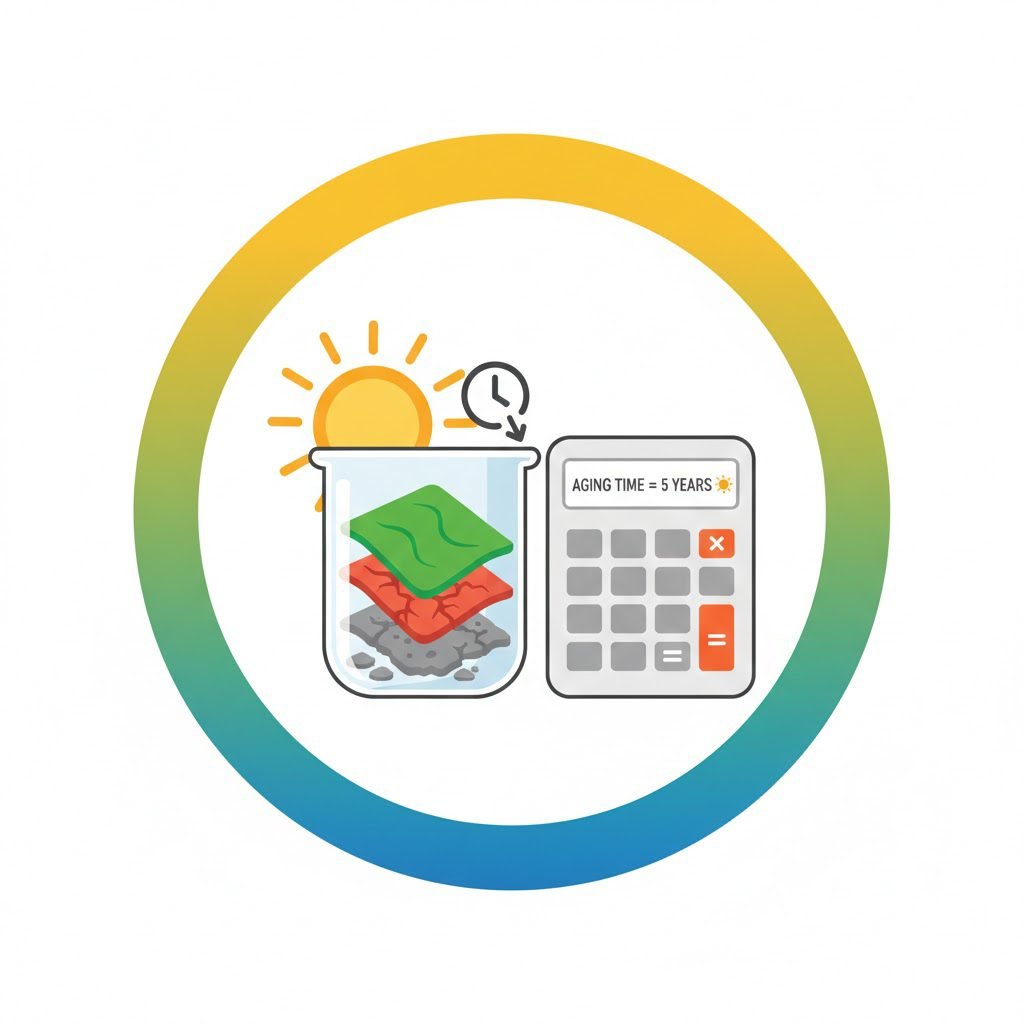
Exposure to sunlight is one of the most overlooked factors in material degradation. Whether you’re designing outdoor furniture, constructing greenhouses, or manufacturing plastic components, knowing how your materials age under UV radiation is crucial. This is where the Sunlight Material Aging Calculator comes in—a tool designed to help you estimate how different materials respond to sunlight, UV exposure, and environmental conditions over time.
Imagine this: you installed acrylic panels on a rooftop greenhouse, expecting them to last a decade. Three years later, cracks and discoloration appear. Could this have been predicted? With this calculator, you can make informed decisions before investing, saving time, money, and effort.
How the Sunlight Material Aging Calculator Works
The calculator uses scientifically-informed degradation factors to estimate material aging. Here’s how it breaks down:
Inputs You Provide:
-
Material Type: Options include Acrylic (PMMA), Polycarbonate (PC), Polypropylene (PP), ABS, PVC, HDPE, or General Plastic.
-
Average Daily Sunlight Hours: The amount of sun your material receives daily.
-
UV Exposure Level: Ranges from Low (indoor or northern climates) to Very High (desert regions or high altitudes).
-
UV Stabilization: Indicates whether the material has protective additives.
-
Desired Lifespan (Years): The number of years you want to estimate aging for.
Outputs You Receive:
-
Estimated Aging Percentage over your chosen period.
-
Aging Status: Minimal, Moderate, Significant, or Severe Degradation.
-
Approximate Lifespan: Adjusted for material type and UV protection.
-
Practical Advice: Recommendations for prolonging material life.
The Logic Behind Calculations:
The calculator determines a relative degradation rate using:
Where:
-
baseFactordepends on the material (e.g., Polycarbonate = 0.8, Polypropylene = 1.5). -
uvFactorcorresponds to exposure intensity (Low = 0.5, Very High = 2.0). -
stabilizationFactorreduces aging if UV additives are present (Yes = 0.3, No = 1.0).
The aging percentage is calculated as:
Finally, lifespan is estimated:
These formulas ensure that higher UV exposure and unprotected materials degrade faster.
Practical Examples
Example 1: Acrylic Panel in Temperate Climate
-
Material: Acrylic
-
Sun Hours: 8 per day
-
UV Level: Moderate
-
UV Stabilized: No
-
Years: 10
Calculation:relativeRate = 1.0 * 1.0 * 1.0 = 1.0agingPercent = 1.0 * 10 * 10 = 100% → capped at 100%lifespanEstimate = 5 / 1.0 = 5 years
Interpretation: The material will reach severe degradation before the desired 10 years. Adding UV stabilizers can extend lifespan significantly.
Example 2: HDPE in Tropical Climate with Stabilizers
-
Material: HDPE
-
Sun Hours: 10 per day
-
UV Level: High
-
UV Stabilized: Yes
-
Years: 15
Calculation:relativeRate = 1.1 * 1.5 * 0.3 ≈ 0.495agingPercent = 0.495 * 15 * 10 ≈ 74%lifespanEstimate = 20 / 0.495 ≈ 40.4 years
Interpretation: Even under intense UV, UV-stabilized HDPE can last multiple decades.
Example 3: PVC in Low Sunlight
-
Material: PVC
-
Sun Hours: 4 per day
-
UV Level: Low
-
UV Stabilized: No
-
Years: 20
Calculation:relativeRate = 1.3 * 0.5 * 1.0 = 0.65agingPercent = 0.65 * 20 * 10 = 100% → cappedlifespanEstimate = 5 / 0.65 ≈ 7.7 years
Interpretation: Low sunlight slows degradation, but PVC without stabilizers still degrades significantly over long periods.
Tips to Prolong Material Lifespan
-
Use UV stabilizers or coatings.
-
Reduce direct sunlight exposure when possible.
-
Choose materials suited to your regional UV index.
-
Perform periodic inspections to detect early signs of cracking, fading, or brittleness.
You can also cross-check with other tools like the UV Exposure Material Damage Estimator or Reflective Material Performance Calculator to refine predictions for specialized applications.
Frequently Asked Questions
1. Can the calculator predict exact failure times?
No. It provides estimates based on average exposure and material properties. Real-world conditions may vary.
2. Does material thickness affect aging?
Yes. Thicker materials may degrade slower, but the calculator assumes standard thickness for general comparison.
3. How reliable are UV stabilizers?
They significantly reduce degradation but are not permanent. Supplement with shading or coatings for critical applications.
Conclusion
The Sunlight Material Aging Calculator empowers engineers, architects, and hobbyists to predict material performance under sunlight accurately. By understanding UV exposure, material properties, and protective additives, you can extend the lifespan of plastics, polymers, and composites. Experiment with different scenarios to see how stabilization, sunlight intensity, and climate impact your project.
Check related tools for deeper insights: Solar Panel Material Efficiency Calculator, Radiation Shielding Calculator, and more. Take control of your material’s durability today—plan smarter, protect better, and reduce costly replacements.