Tax Equivalent Yield Calculator
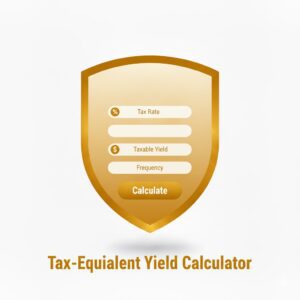
Tax-Equivalent Yield Calculator
Compare tax-free municipal bonds with taxable investments – see what yield you’d need on a taxable bond to match a muni.
Tax Equivalent Yield Calculator: Maximize Your Bond Investment Returns
A Tax Equivalent Yield Calculator is an essential tool for investors looking to compare tax-free municipal bonds with taxable investments. By calculating the equivalent yield on a taxable bond, investors can make informed decisions that maximize after-tax returns. This calculator simplifies complex tax considerations into clear, actionable numbers.
Investing in municipal bonds often seems appealing due to their tax-free interest benefits. However, understanding how they stack up against taxable alternatives requires precise calculations. The TEY Calculator bridges that gap, enabling investors to see the true value of their investments after accounting for taxes.
This guide explores the mechanics of a Tax-Adjusted Yield Calculator, provides practical examples, shares expert insights, and demonstrates how investors can use this tool to make smarter financial choices.
How a Tax Equivalent Yield Calculator Works
A Tax Equivalent Yield Calculator determines the yield a taxable investment must offer to match the returns of a tax-free bond. Municipal bonds, often issued by cities and states, provide interest exempt from federal—and sometimes state—taxes. Without a calculator, comparing these yields to taxable bonds can be confusing.
The formula for tax-equivalent yield is simple:
-
Tax-Free Yield: The yield from a municipal bond.
-
Marginal Tax Rate: The investor’s combined federal and state tax percentage.
For example, an investor in a 37% tax bracket earning 3.5% from a municipal bond would calculate the TEY as:
This means a taxable bond must yield 5.56% to match the tax-free municipal bond return. Using a Tax-Adjusted Yield Calculator removes manual guesswork and ensures precise comparisons.
Benefits of Using a TEY Calculator
-
Maximizes After-Tax Returns
Investors can identify which investments truly deliver better net income. -
Simplifies Complex Calculations
The calculator accounts for federal and state taxes automatically. -
Supports Smart Portfolio Allocation
Helps balance tax-free and taxable investments efficiently. -
Saves Time
Manual TEY calculations can be tedious, especially for multiple bonds. -
Enhances Investment Strategy
Understanding tax-equivalent yields ensures optimal choices during high or low-interest periods.
For those curious about broader investment calculators, tools like the Coupon Rate Calculator or Times Interest Earned Ratio Calculator provide complementary insights into bond and debt analysis.
Practical Example: Comparing Tax-Free and Taxable Bonds
Imagine Sarah, an investor in a 32% federal tax bracket. She is deciding between:
-
A municipal bond yielding 4%, tax-free.
-
A corporate bond yielding 6%, taxable.
Using the Tax Equivalent Yield Calculator, Sarah calculates:
Here, the corporate bond at 6% slightly exceeds the tax-equivalent yield, making it the better choice after taxes. Without the calculator, she might have underestimated the impact of taxes and chosen the wrong investment.
Key Factors Affecting Tax-Equivalent Yield
-
Federal and State Taxes: Higher tax brackets increase the value of municipal bonds.
-
Investment Horizon: Short-term vs long-term tax impact differs.
-
Bond Type: Some municipal bonds are federally tax-exempt but not state-exempt.
-
Market Conditions: Fluctuating interest rates affect the relative benefit of tax-free bonds.
Using a Bond Tax Equivalent Return Calculator simplifies these considerations, offering precise calculations tailored to individual circumstances.
Expert Insights and Statistics
According to a 2024 report by the Municipal Securities Rulemaking Board (MSRB):
-
Municipal bonds accounted for over $4 trillion in U.S. outstanding debt.
-
High-income investors (marginal tax rate above 35%) saw an average 1.5–2% advantage using tax-free bonds.
Financial advisor John Reynolds notes:
“Tax-equivalent yield is not just about numbers; it’s about strategic allocation. High-tax investors often overlook municipal bonds, thinking the yields are low. Calculators make the comparison transparent.”
How to Use a Tax-Adjusted Yield Calculator Effectively
Follow these steps to get the most from a TEY Calculator:
-
Input the municipal bond yield (e.g., 3.5%).
-
Enter your combined federal and state tax rate.
-
Review the calculated tax-equivalent yield.
-
Compare it with taxable bond options.
-
Adjust for investment goals and risk tolerance.
Regular use of a Tax-Adjusted Yield Calculator allows investors to re-evaluate portfolios efficiently during tax law changes or market fluctuations.
Real Case Study: High-Income Investor Strategy
David, a high-income professional in the 37% tax bracket, faced a decision:
-
$100,000 in municipal bonds yielding 3.75% tax-free.
-
$100,000 in corporate bonds yielding 6.25% taxable.
TEY calculation:
Even though the corporate bond appeared higher at 6.25%, the TEY calculator revealed only a small net advantage. Considering risk, David allocated 70% to municipal bonds for safer returns, demonstrating how calculators support nuanced decision-making.
Advantages of Digital Tools
Modern online Investment Tax Yield Analyzers offer additional features:
-
Mobile-friendly interface for fast calculations.
-
Built-in state tax considerations.
-
Option to calculate multiple bond scenarios simultaneously.
-
Copyable results for reporting or portfolio tracking.
Tools like Ahmad Free Tools Finance Calculators provide a full suite of investment analysis utilities that complement the TEY Calculator.
Common Questions About Tax Equivalent Yield
What is the difference between nominal yield and TEY?
Nominal yield ignores taxes, while TEY accounts for the investor’s tax rate, showing actual after-tax returns.
Can TEY exceed the taxable bond yield?
Yes. For investors in high tax brackets, tax-free municipal bonds can offer higher effective returns than some taxable options.
Does TEY consider state taxes?
A proper Tax-Adjusted Yield Calculator can include both federal and state taxes to reflect accurate after-tax comparisons.
Best Practices for Investors
-
Always check your marginal tax rate, as it directly affects TEY.
-
Combine TEY calculations with other bond metrics, such as coupon rate and yield to maturity, for a complete picture.
-
Reassess portfolios after tax law changes.
-
Compare multiple municipal bonds using online TEY calculators to identify optimal options.
Tools and Resources
-
Coupon Rate Calculator for bond interest analysis.
-
Times Interest Earned Ratio Calculator for debt coverage insights.
-
Ahmad Free Tools Finance Calculators for full financial toolkit.
Conclusion
A Tax Equivalent Yield Calculator empowers investors to make smart, informed choices. It highlights the true value of tax-free municipal bonds against taxable alternatives, ensuring optimal after-tax returns. With practical examples, expert insights, and modern calculators, investors gain confidence in their financial strategies.
Regularly using tools like TEY Calculator, Tax-Adjusted Yield Calculator, or Bond Tax Equivalent Return Calculator helps maintain an efficient, tax-conscious investment portfolio. By combining this knowledge with broader financial calculators, investors can enhance decision-making and maximize profits in any market scenario.