Yeast Activity Predictor
Yeast Activity Predictor
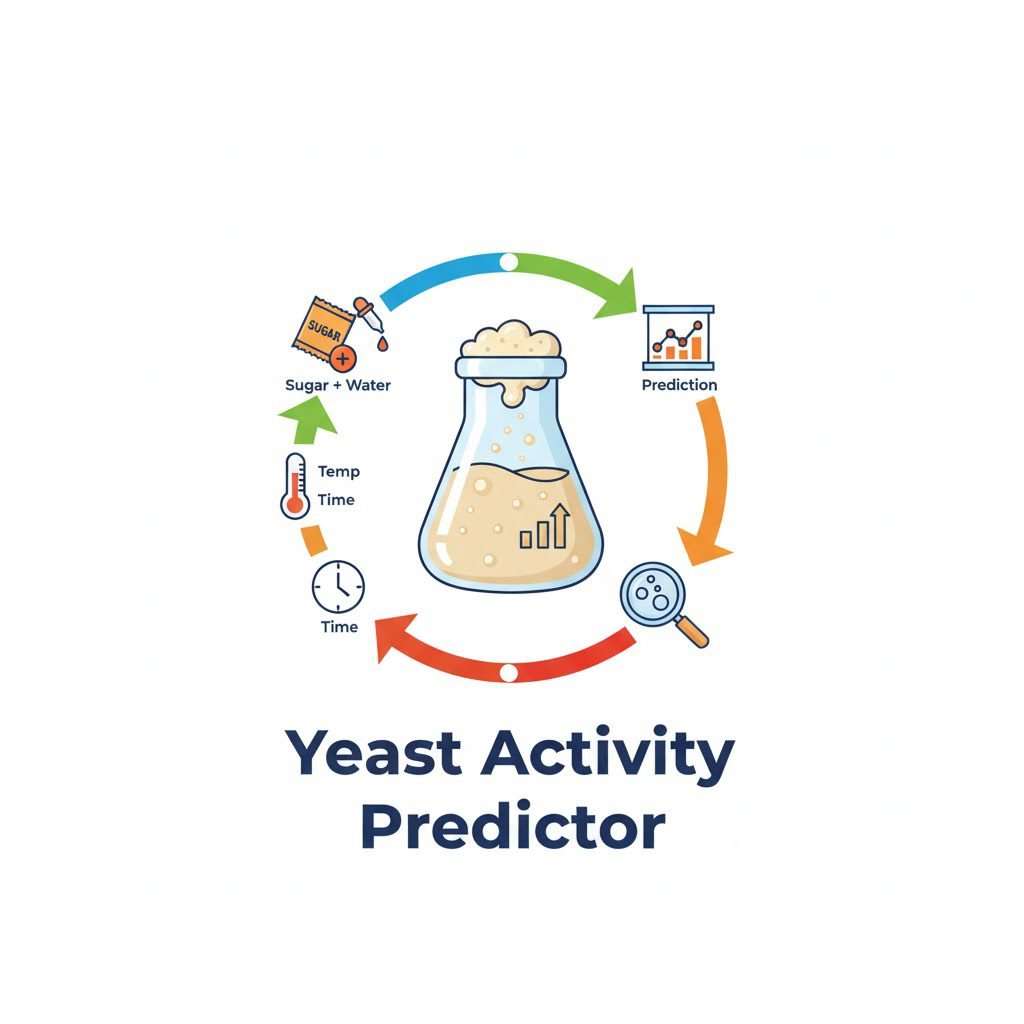
Predict how active and healthy your yeast will be — and how fast your dough will rise. Enter yeast type, temperature, sugar, age, and water conditions for estimated activity level and rise time guidance.
How to Know How Active Your Yeast Will Be
Have you ever mixed yeast into your dough and wondered whether it would rise properly, or if it might take twice as long? That’s exactly the problem the Yeast Activity Predictor solves. This tool helps bakers, both beginners and professionals, estimate how healthy and active their yeast is under different conditions, so you can plan proofing times more accurately and avoid flat or dense bread.
Whether you’re baking sourdough, sandwich loaves, or sweet rolls, knowing your yeast’s activity level can save hours of trial and error. By considering factors like yeast type, temperature, sugar content, age, and water quality, the Yeast Activity Predictor gives practical guidance on expected rise speed and fermentation health.
What Inputs Does the Yeast Activity Predictor Require?
The tool works by collecting a few essential details about your dough and yeast. Here’s what it asks for and why each matters:
Yeast Type
Different yeast strains behave differently. The tool supports:
-
Instant / Rapid-rise yeast – Fast, reliable, and tolerant to sugar and temperature variations.
-
Active dry yeast – Needs proofing in warm water to activate fully.
-
Fresh / Cake yeast – Delicate, short shelf life, but very active when fresh.
-
Sourdough starter – Natural levain, slower but steady, dependent on feeding and maturity.
Dough Temperature
Yeast activity is extremely sensitive to heat:
-
Optimal growth: 24–32°C.
-
Cold slows activity dramatically; too hot can kill yeast.
The predictor uses a formula to adjust activity based on temperature. For example, if your dough is 28°C, yeast activity is slightly boosted, while 40°C starts reducing effectiveness.
Sugar Content
Yeast feeds on sugar, but too much sugar can cause osmotic stress, slowing fermentation. The tool calculates an activity modifier depending on sugar percentage:
-
0–5%: Slightly reduced activity.
-
5–10%: Optimal growth.
-
10–20%: Moderate slowdown.
-
Above 20%: Significant reduction unless using osmotolerant yeast.
Yeast Age or Condition
Freshness directly affects performance:
-
Fresh yeast: Full activity.
-
Medium-aged dry yeast: Slightly reduced.
-
Old yeast: Weak activity, risky for proofing.
-
Peak sourdough starter: Slight boost due to recent feeding.
Water Quality
Chlorine and mineral content affect yeast health:
-
Good (soft or filtered) water: Ideal.
-
Hard water (>180 ppm): Slight reduction.
-
Chlorinated tap water: Significant slowdown; consider letting water sit 24 hours or filtering.
How Does the Yeast Activity Predictor Work?
The tool calculates a yeast activity score from 0 to 100 based on the inputs. Here’s the logic simplified:
The result categorizes activity as:
-
Excellent (85–100): Fast rise, very vigorous dough.
-
Good (65–84): Healthy, reliable fermentation.
-
Moderate (40–64): Slower activity; longer proofing recommended.
-
Low / Weak (<40): Yeast may not rise; proof test advised.
The tool also predicts rise speed, giving you practical guidance to adjust your recipe timing.
Can You See Real-Life Examples of Yeast Activity?
Here are three practical scenarios illustrating the tool’s use:
Example 1: Standard Bread Dough
-
Yeast: Instant dry
-
Temperature: 28°C
-
Sugar: 5%
-
Yeast Age: Fresh
-
Water: Good
Result:
-
Activity Score: ~85
-
Prediction: Excellent – expect faster rise than standard recipe
-
Practical Tip: Check dough 20–30% earlier than recipe timing
Example 2: Sweet Enriched Dough
-
Yeast: Active dry
-
Temperature: 30°C
-
Sugar: 15%
-
Yeast Age: Medium
-
Water: Hard
Result:
-
Activity Score: ~60
-
Prediction: Moderate – slower rise
-
Practical Tip: Use slightly warmer water (32–38°C) or proof longer
Example 3: Sourdough Starter
-
Yeast: Sourdough starter
-
Temperature: 26°C
-
Sugar: 0%
-
Yeast Age: Peak (fed 6 hours ago)
-
Water: Good
Result:
-
Activity Score: ~70
-
Prediction: Good – steady rise expected
-
Practical Tip: Maintain consistent feeding schedule for predictable activity
These examples show how adjusting temperature, sugar, and yeast condition can dramatically impact dough performance.
How Can This Tool Improve Your Baking?
-
Avoid Under- or Over-proofing: By predicting activity, you can plan exact rise times.
-
Save Ingredients and Time: No more guessing or wasted dough.
-
Adapt Recipes Easily: Adjust sugar, water, or yeast type and see the effect instantly.
-
Learn Yeast Science: Understand how temperature, hydration, and age interact with fermentation.
FAQs About Yeast Activity
1. Can I rely solely on the predictor for perfect bread?
The tool provides accurate estimates based on typical baking science, but factors like flour type, humidity, and salt can also affect results. Always do a small proof test if uncertain.
2. What if my yeast score is very low?
Scores below 40 indicate weak or possibly dead yeast. Proof your yeast in warm water with sugar first; if it doesn’t foam in 10 minutes, replace it.
3. Does sugar always speed up yeast?
Moderate sugar boosts activity, but high sugar (>15%) can cause osmotic stress. For sweet doughs, consider osmotolerant yeast or longer proofing.
Related Tools to Try
-
Cooking Loss Estimator – Predict ingredient shrinkage during cooking.
-
Bubble Tea Calculator – Measure sugar, calories, and flavor ratios for drinks.
-
Black Tea Brewing Calculator – Perfect brewing times and temperature guidance.
These tools complement the Yeast Activity Predictor for a more precise cooking and baking workflow.
Conclusion
The Yeast Activity Predictor is a practical, science-backed tool for bakers who want predictable dough rises and optimal yeast performance. By factoring in yeast type, temperature, sugar content, age, and water quality, it provides a detailed activity score and actionable guidance. Whether you’re making classic bread, sweet dough, or sourdough starters, testing different scenarios can save time, reduce waste, and improve baking consistency.
Try the tool today, experiment with your dough, and watch your baking results improve with predictable, professional outcomes.