Top 10 Online Free Electronics Calculators
Top 10 Online Free Electronics Calculators
Finding accurate and efficient electronics calculators can save hours of tedious work for students, engineers, and hobbyists alike. The Top 10 Online Free Electronics Calculators presented here allow users to perform complex circuit calculations, analyze electrical components, and optimize designs without needing expensive software. Whether designing a simple resistor network or a complex DC-DC converter, these tools provide instant results with practical examples for real-world applications.
Understanding electrical principles becomes easier when calculations are automated. With Free Electronics Calculators Online, users can focus on designing circuits instead of spending time on manual computations. These calculators also act as a valuable learning aid for beginners and a reliable validation tool for professionals.

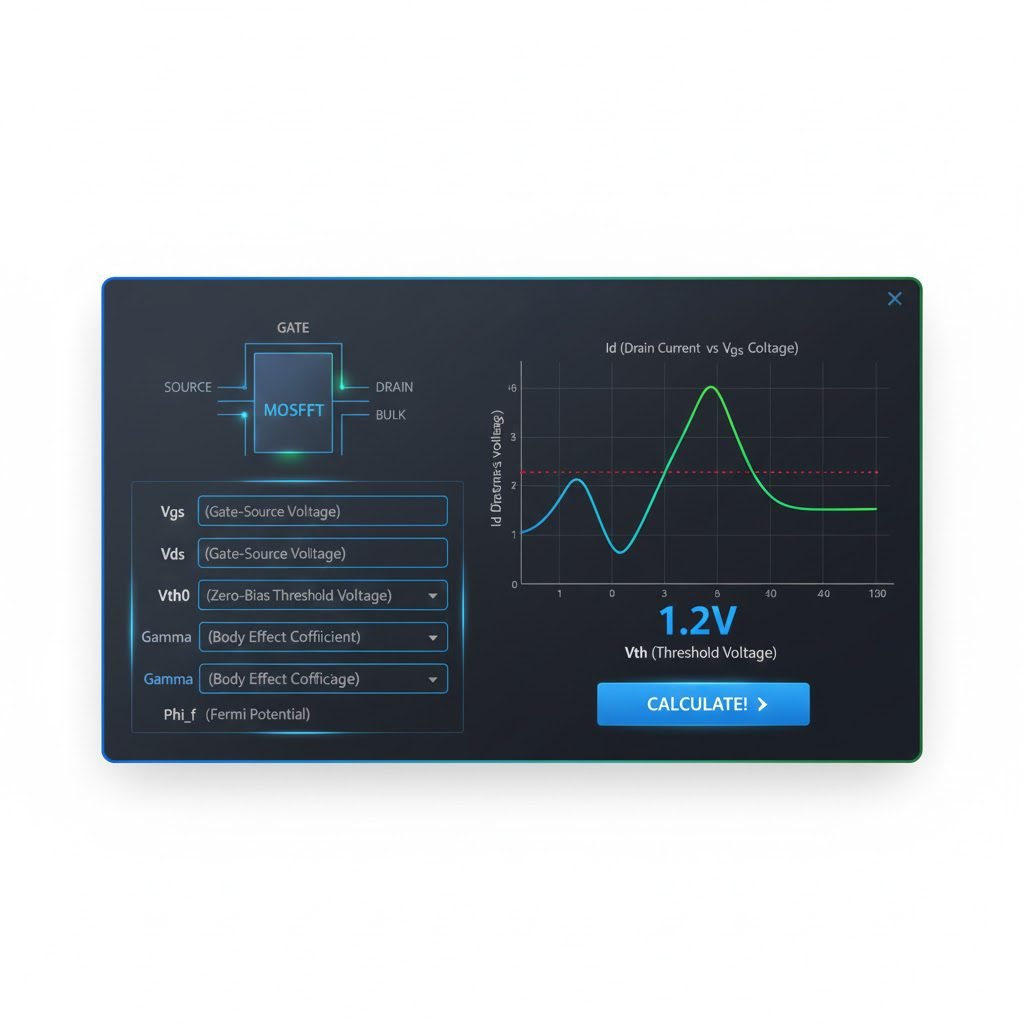
1. MOSFET Threshold Voltage Calculator
The MOSFET Threshold Voltage Calculator is a critical tool for semiconductor engineers. It helps determine the gate-source voltage V_GS(th) needed to switch a MOSFET from OFF to ON state.
Practical Example:
A designer wants to switch a MOSFET with a V_GS(th) of 2V. Using the calculator, they can ensure the applied gate voltage exceeds this value to avoid incomplete conduction, ensuring the circuit operates efficiently.
By using the MOSFET calculator, you can analyze transistor behavior in analog and digital circuits accurately, minimizing trial-and-error in design. This is one of the most essential Electronics Formula Calculators for electronics enthusiasts.
2. Inverting Buck-Boost Converter Calculator
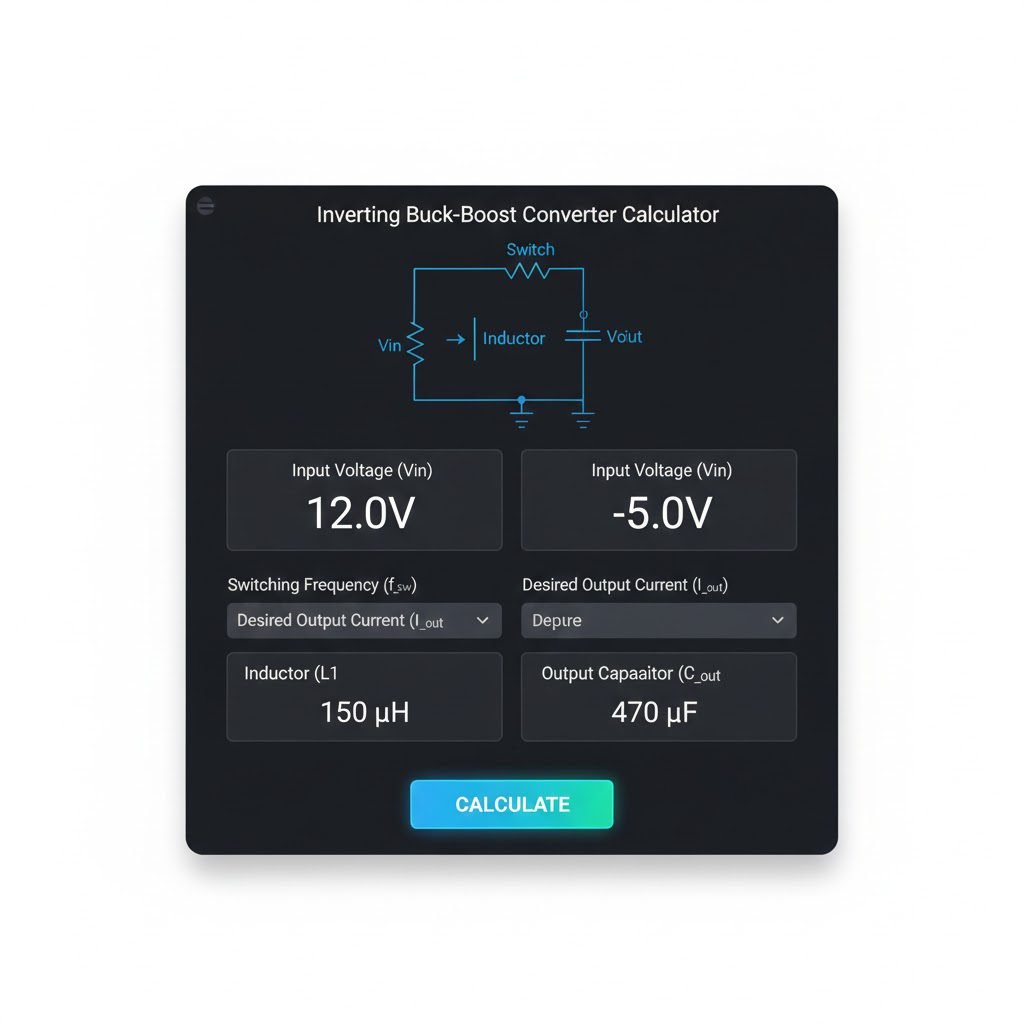
Managing voltage conversion efficiently is crucial in power electronics. The Inverting Buck-Boost Converter Calculator provides output voltage V_out, duty cycle D, and ripple current I_r for negative DC-DC conversion.
Practical Example:
A portable device requires a negative voltage of -12V from a 5V source. By entering input and output values, the calculator instantly provides the duty cycle and inductor size to design a compact converter circuit.
Engineers can save significant time by leveraging this tool rather than manually solving V_out = -V_in * D / (1-D). Using the inverting converter calculator ensures students and professionals understand component selection better.
3. Resistor Color Code Calculator
Reading resistor color codes can be error-prone. The Resistor Color Code Calculator converts color bands into resistance and tolerance values instantly.
Real-World Example:
A technician encounters a resistor with bands brown, black, red, and gold. Using this calculator, it immediately outputs 1kΩ ±5%, saving time and avoiding mistakes in prototype circuits.
This simple yet effective Online Circuit Calculation Tool is perfect for beginners, hobbyists, and anyone working on breadboard projects. It also doubles as a learning tool for electrical engineering students, enhancing understanding of passive components.

4. Boost Converter Calculator
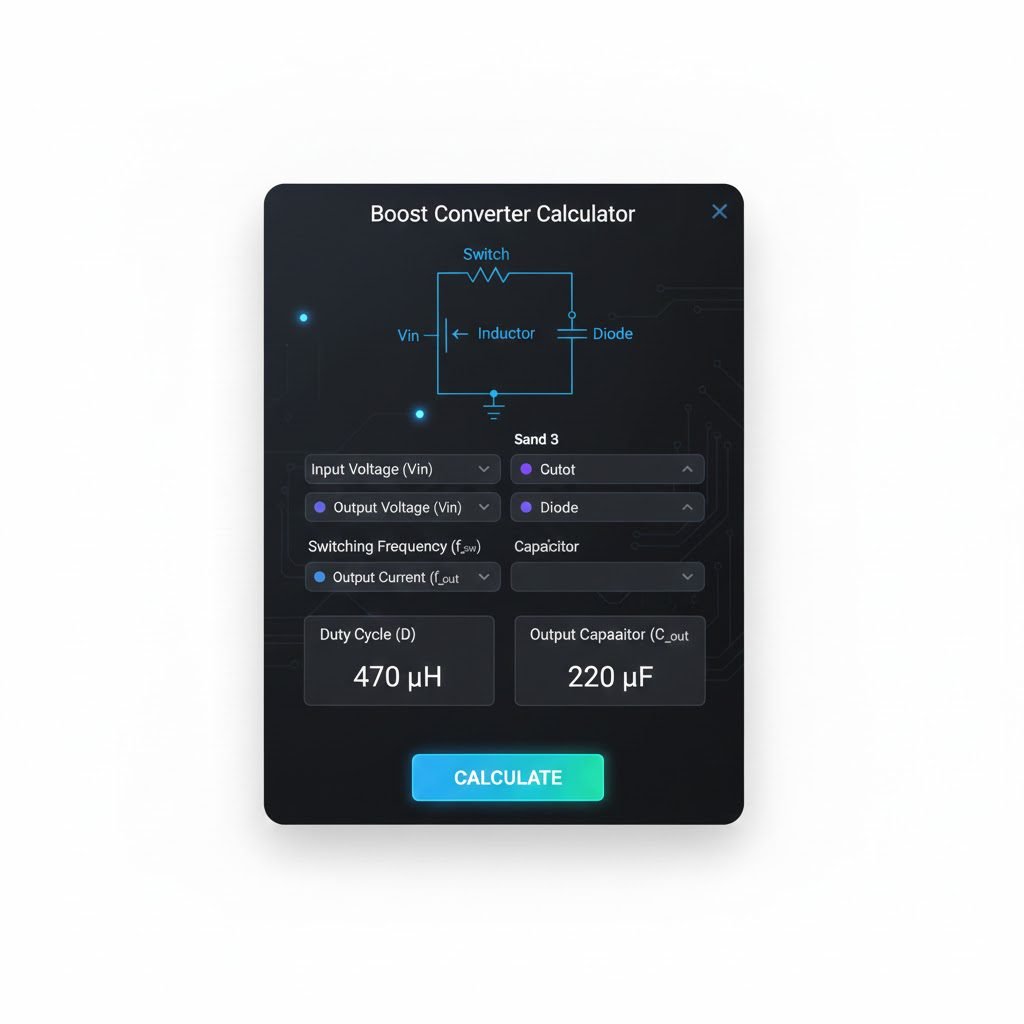
For designing efficient step-up power supplies, the Boost Converter Calculator is indispensable. It calculates duty cycle D, inductor L, and output capacitor C values.
Practical Example:
Suppose a battery-powered sensor requires 12V output from a 5V source. By using this calculator, engineers can design a compact and efficient converter without guesswork, ensuring minimal voltage ripple and energy loss.
This tool is among the most reliable Electrical Engineering Calculators for circuit designers working on low-power or high-efficiency applications.
5. Wheatstone Bridge Calculator
The Wheatstone Bridge Calculator simplifies resistance measurements in precision circuits. It computes unknown resistances using the formula R_x = (R_2 * R_3) / R_1.
Practical Example:
A sensor calibration requires measuring an unknown resistor R_x. By inputting known resistor values into the calculator, the exact resistance is instantly determined, saving hours of manual calculation.
This tool highlights the importance of Free Electronics Calculators Online for accurate measurement and verification in lab experiments.

6. RLC Impedance Calculator
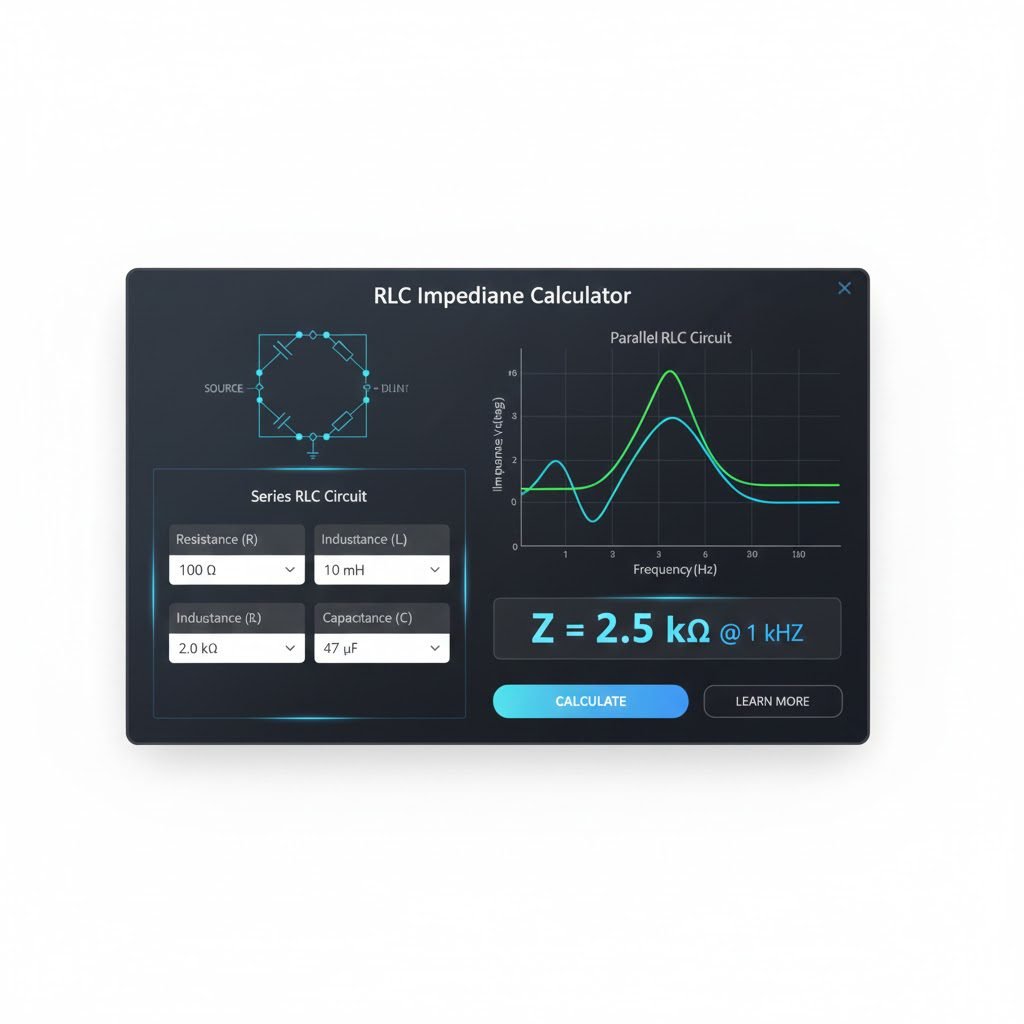
Calculating impedance in RLC circuits manually can be tedious. The RLC Impedance Calculator computes total impedance Z in series or parallel circuits using the formula Z = √(R² + (X_L - X_C)²) for series arrangements.
Practical Example:
An audio filter requires a series RLC with R=10Ω, L=0.1H, and C=100μF. Entering these values gives the total impedance at 50Hz, allowing engineers to optimize filter design for minimal signal loss.
This tool is an excellent Online Circuit Calculation Tool for electrical engineering students working on AC circuit analysis.
7. Buck Converter Calculator
Step-down converters are widely used in electronics. The Buck Converter Calculator determines duty cycle D, inductor L, and output capacitor C values for efficient voltage regulation.
Practical Example:
A 12V DC supply is stepped down to 5V for a microcontroller. By using the calculator, component values are accurately determined, reducing prototyping errors and ensuring reliable operation.
Engineers often integrate this calculator with other Electronics Formula Calculators to design complex power management circuits efficiently.

8. Solar Panel Wattage Calculator
Estimating power output of solar panels becomes easier with the Solar Panel Wattage Calculator. It calculates energy production based on voltage, current, and sunlight hours.
Practical Example:
A designer wants to power a 12V battery system with a 100W panel. By using this calculator, expected energy output per day is instantly estimated, aiding system planning and component selection.
This calculator is an essential tool for both Electrical Engineering Calculators and eco-friendly electronics projects.

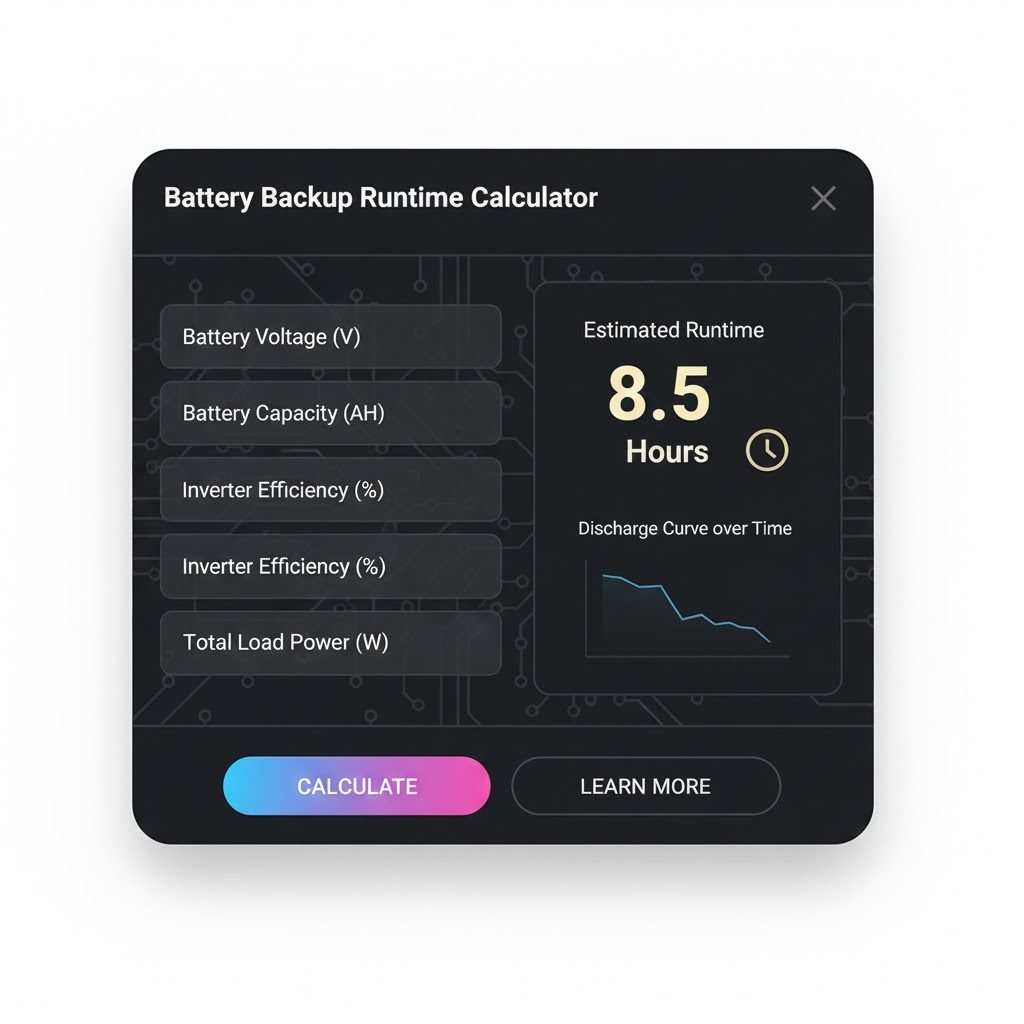
9. Battery Backup Runtime Calculator
The Battery Backup Runtime Calculator predicts how long a battery can supply power to a device before depletion. It uses the formula Runtime (hours) = Battery Capacity (Ah) * Battery Voltage / Load Power (W).
Practical Example:
For a 12V 7Ah battery powering a 24W light, the runtime calculator estimates approximately 3.5 hours, helping users plan for uninterrupted operation.
This calculator is widely used in UPS design, solar energy projects, and portable electronics.
10. Energy Demand vs Supply Calculator
Managing electrical loads requires balancing supply and demand. The Energy Demand vs Supply Calculator helps engineers calculate total energy consumption and match it with supply capacity.
Practical Example:
An electronics lab wants to ensure its power source meets all equipment demands. By entering load data, the calculator highlights potential shortages, enabling proactive adjustments.
This tool is a reliable Online Circuit Calculation Tool for planning and maintaining electrical systems effectively.

Practical Examples in Real Life
Example 1: Designing a home solar-powered lighting system requires calculating energy output from panels and matching it with battery storage. Using the Solar Panel Wattage Calculator and Battery Backup Runtime Calculator ensures proper sizing of all components.
Example 2: Students experimenting with a breadboard circuit can instantly verify resistor and capacitor values using the Resistor Color Code Calculator and RLC Impedance Calculator, improving learning and reducing trial-and-error.
Example 3: Engineers designing portable electronics rely on the Boost Converter Calculator and Buck Converter Calculator to ensure voltage levels remain stable under varying loads, improving device reliability.
Frequently Asked Questions (FAQs)
What is the easiest way to calculate resistor values?
Using a Resistor Color Code Calculator allows you to input color bands and instantly get resistance and tolerance values, reducing manual errors.
Can I use these calculators for professional circuit design?
Absolutely. Tools like the MOSFET Threshold Voltage Calculator and Inverting Buck-Boost Converter Calculator are widely used by engineers to design and validate real-world circuits.
Are these calculators free to use?
Yes, all the listed Top 10 Online Free Electronics Calculators are completely free and accessible online, making them ideal for students, hobbyists, and professionals alike.
Conclusion
The Top 10 Online Free Electronics Calculators provide an efficient and reliable way to perform accurate circuit calculations without investing in expensive software. From simple resistor identification to complex power converter design, these tools save time, reduce errors, and improve learning for students and engineers. Leveraging Free Electronics Calculators Online enhances productivity and ensures precise results in both academic and professional projects. Incorporating these calculators into your workflow is essential for anyone involved in electronics and electrical engineering.