How to Perform Gravimetric Analysis Step by Step
How to Perform Gravimetric Analysis Step by Step
Gravimetric analysis is a fundamental technique in analytical chemistry used to determine the amount of an analyte by measuring mass. If you’ve ever wondered how chemists precisely measure substances, gravimetric analysis is a perfect example of accuracy in action. This method is widely used in laboratories for purity checks, environmental testing, and material composition analysis because it relies on direct measurement rather than inference.
In this guide, we will walk you through how to perform gravimetric analysis step by step, providing practical examples, clear formulas, and expert insights so you can confidently apply this technique in real-world scenarios.
What Is Gravimetric Analysis?
Gravimetric analysis is a quantitative method where the amount of a substance is determined by isolating it in a pure form and weighing it. The principle is simple: if you can convert an unknown substance into a stable, measurable compound (usually a precipitate), weighing it allows you to calculate the original concentration.
Key benefits of gravimetric analysis:
-
High accuracy and precision
-
Minimal interference from other ions
-
Direct measurement using mass, making calculations straightforward
Common applications:
-
Determining chloride content in water samples
-
Measuring sulfate ions in soil
-
Checking metal content in ores or alloys
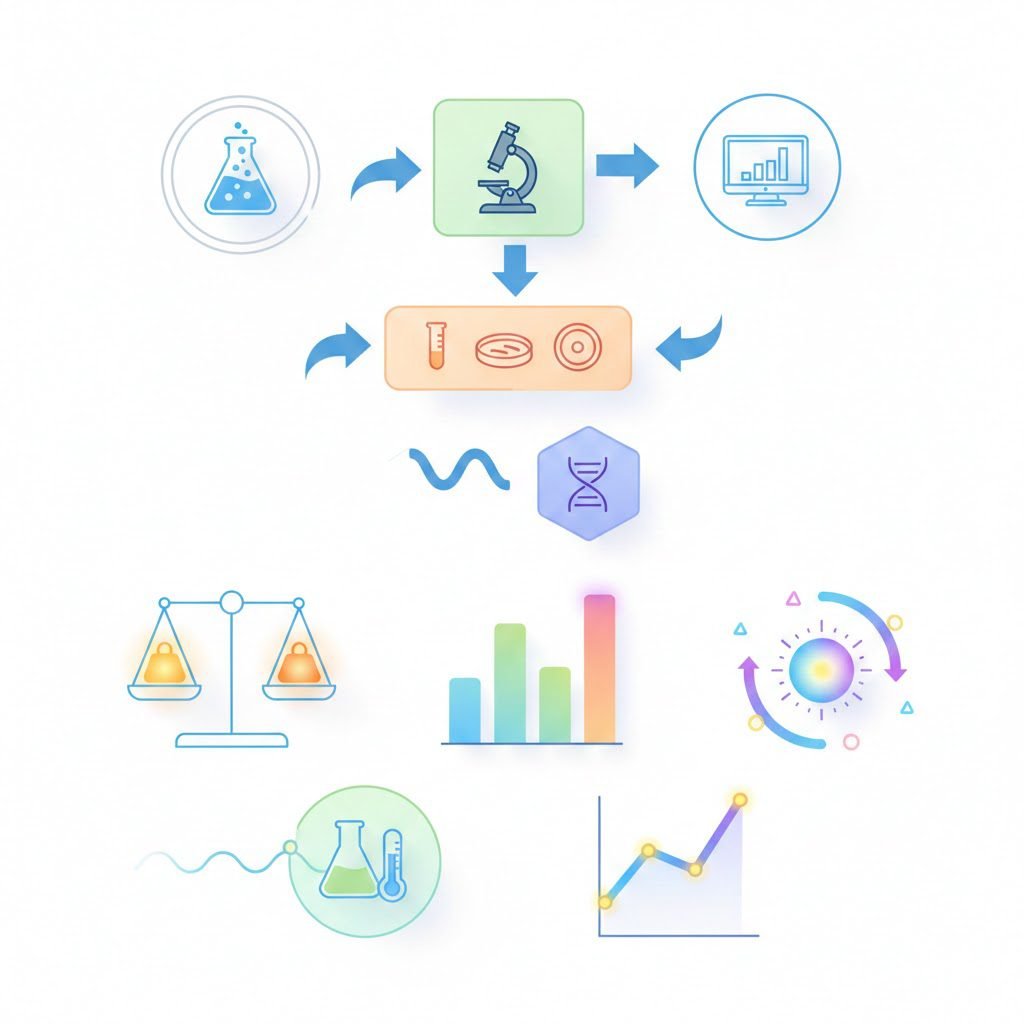
Step-by-Step Gravimetric Analysis
Step 1: Sample Preparation
-
Weigh the sample accurately using an analytical balance.
-
Dissolve the sample in an appropriate solvent, usually distilled water or an acid/base solution.
-
Filter or centrifuge if the sample contains insoluble particles to ensure a clear solution.
Example: If analyzing calcium content in milk, first dissolve the milk powder in dilute nitric acid to solubilize calcium ions.
Step 2: Precipitation
-
Add a reagent that reacts specifically with the analyte to form a sparingly soluble compound (precipitate).
-
Ensure complete precipitation by controlling pH, temperature, and reaction time.
-
Avoid excess reagent that could cause co-precipitation of impurities.
Example: For chloride determination, silver nitrate (AgNO₃) reacts with chloride ions to form silver chloride (AgCl) precipitate:
Step 3: Digestion
-
Gently heat the precipitate in its mother liquor or let it stand for several hours.
-
This step allows the particles to grow larger, forming purifiable crystals.
-
Larger crystals are easier to filter and wash, reducing contamination.
Pro Tip: Avoid stirring too vigorously; you don’t want to break the forming crystals.
Step 4: Filtration
-
Filter the precipitate using a pre-weighed filter paper or a sintered glass crucible.
-
Wash the precipitate with a small amount of cold solvent to remove impurities.
-
Ensure no loss of product during washing.
Example: In AgCl precipitation, washing with dilute nitric acid prevents silver chloride from reacting with carbonate impurities.
Step 5: Drying or Ignition
-
Dry the precipitate at a specific temperature until it reaches constant weight.
-
For some compounds (e.g., metal oxides), ignite in a furnace to remove water or volatile substances.
-
Use a desiccator to cool the sample before weighing.
Example: Heating barium sulfate (BaSO₄) at 600°C ensures all moisture is removed, giving an accurate mass.
Step 6: Weighing
-
Weigh the dried or ignited precipitate accurately using an analytical balance.
-
Record the mass to the nearest 0.1 mg for high precision.
-
Repeat weighing to ensure constant weight is achieved.
Step 7: Calculation
The amount of analyte is calculated based on the stoichiometry of the reaction:
Formula:
Example: Determining chloride in a water sample:
-
Mass of AgCl precipitate = 0.254 g
-
Molar mass of Cl = 35.45 g/mol, AgCl = 143.32 g/mol
-
Sample mass = 10 g water
Real-Life Example Scenarios
-
Water Quality Testing: Determining sulfate content in drinking water using barium sulfate precipitation.
-
Food Industry: Measuring calcium in dairy products through precipitation with oxalate ions.
-
Environmental Analysis: Quantifying heavy metals like lead or copper from soil or wastewater samples.
Common Mistakes to Avoid
-
Using impure reagents, which leads to inaccurate results
-
Incomplete precipitation, causing lower measured analyte
-
Loss of precipitate during filtration or washing
-
Overheating during ignition, decomposing the compound
Frequently Asked Questions
Q1: How long should I digest the precipitate?
A: Generally, 30 minutes to a few hours depending on the compound. Always observe crystal growth before filtration.
Q2: Can gravimetric analysis detect trace elements?
A: Yes, but sensitivity depends on the analyte’s ability to form an insoluble precipitate. Trace detection may require concentration steps.
Q3: How do I know if the precipitate is pure?
A: Use washing, controlled digestion, and checking crystal structure. For some compounds, additional tests like X-ray diffraction may confirm purity.
Conclusion
Gravimetric analysis is a precise, reliable, and versatile method for quantifying substances in various samples. By carefully following the steps—from sample preparation to weighing—you can achieve highly accurate results. Experiment with different reagents and sample types to understand how the process adapts in real-world lab scenarios.
To deepen your analytical chemistry skills, explore related techniques like flame photometry for sodium detection, buffer solution preparation, and mass spectrometry data analysis.