Algae Bloom Risk Calculator
Algae Bloom Risk Calculator
Assess the risk of harmful algal blooms in water bodies based on key environmental factors – globally applicable estimates.
Algae Bloom Risk Calculator: Assess Water Health and Prevent Harmful Algal Blooms
The Algae Bloom Risk Calculator is an essential tool for anyone monitoring water quality—from environmental scientists to lake managers and hobbyists. Imagine noticing your local pond turning bright green during a warm summer week. What causes this sudden bloom? How dangerous is it for aquatic life or recreational use? This is where the calculator becomes invaluable, offering a scientifically grounded estimate of harmful algal bloom (HAB) risk based on key environmental factors.
Understanding and predicting algal blooms is not just academic—it has practical relevance for public health, fisheries, and ecosystem stability. Using this calculator, you can make informed decisions to prevent severe ecological consequences and maintain water safety.
How the Algae Bloom Risk Calculator Works
Inputs You Need
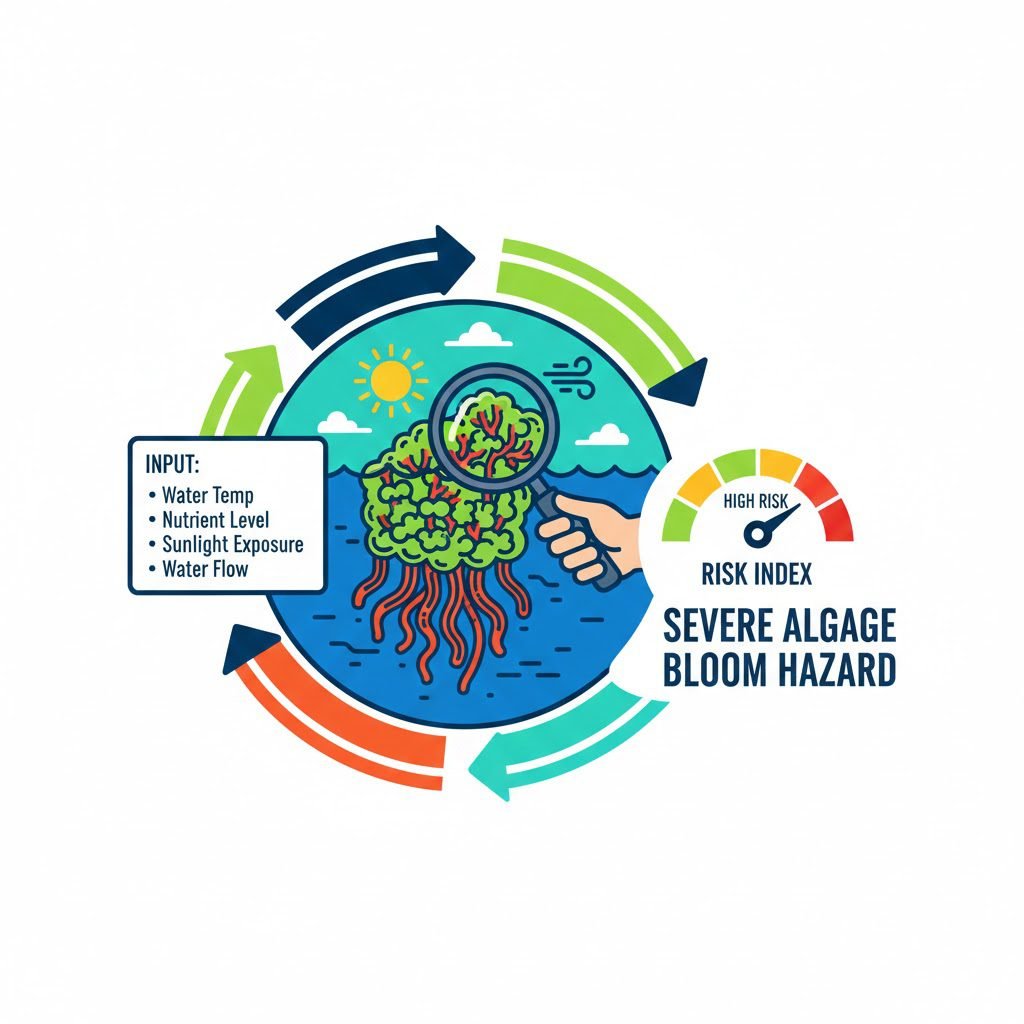
Our calculator evaluates HAB risk using six critical environmental factors:
-
Water Temperature (°C) – Warmer water accelerates algal growth.
-
Total Phosphorus (mg/L) – High phosphorus is a key nutrient fueling blooms.
-
Total Nitrogen (mg/L) – Nitrogen contributes to excessive growth.
-
pH Level – Extreme pH values can suppress or encourage algae.
-
Water Body Type – Lakes and ponds are more susceptible than rivers.
-
Sunlight Exposure – More sunlight generally increases bloom potential.
Calculation Logic
Each factor is scored based on thresholds commonly observed in environmental studies:
-
Temperature Score:
(Water Temp - 15) * 2, capped at 40 points. -
Phosphorus Score: 0 (P<0.05 mg/L), 20 (0.05–0.1 mg/L), 40 (>0.1 mg/L).
-
Nitrogen Score: 0 (N<0.7 mg/L), 15 (0.7–1.5 mg/L), 30 (>1.5 mg/L).
-
pH Score: 0 points if between 6.5–8.5, 20 otherwise.
-
Water Body Type Score: Lake/Pond = 20, River = 10, Coastal = 15.
-
Sunlight Score: High = 20, Medium = 10, Low = 0.
The total risk score is the sum of all points, expressed as a percentage and categorized as Low, Medium, or High risk.
This formula gives a global, comparative estimate rather than an exact local prediction.
Step-by-Step Examples
Example 1: A Warm Lake in Summer
-
Water Temp: 28°C → Temp Score = 26
-
Phosphorus: 0.08 mg/L → Phos Score = 20
-
Nitrogen: 1.2 mg/L → Nitrogen Score = 15
-
pH: 7.5 → pH Score = 0
-
Water Type: Lake → Type Score = 20
-
Sunlight: High → Sun Score = 20
Total Score: 26 + 20 + 15 + 0 + 20 + 20 = 101
Risk: High (~72%)
This illustrates why many lakes experience blooms in warm, nutrient-rich summers.
Example 2: River with Moderate Sunlight
-
Water Temp: 18°C → Temp Score = 6
-
Phosphorus: 0.03 mg/L → Phos Score = 0
-
Nitrogen: 0.5 mg/L → Nitrogen Score = 0
-
pH: 7.0 → pH Score = 0
-
Water Type: River → Type Score = 10
-
Sunlight: Medium → Sun Score = 10
Total Score: 6 + 0 + 0 + 0 + 10 + 10 = 26
Risk: Low (~18%)
Flowing rivers with moderate nutrients and sunlight are less prone to harmful blooms.
Example 3: Pond with Poor Water Quality
-
Water Temp: 24°C → Temp Score = 18
-
Phosphorus: 0.15 mg/L → Phos Score = 40
-
Nitrogen: 2.0 mg/L → Nitrogen Score = 30
-
pH: 9 → pH Score = 20
-
Water Type: Pond → Type Score = 20
-
Sunlight: High → Sun Score = 20
Total Score: 148 → Risk = High (100%)
Small ponds can quickly turn toxic if nutrient control is neglected.
Why This Calculator Matters
Harmful algal blooms have direct consequences:
-
Public Health Risks: Some algae produce toxins affecting humans and pets.
-
Aquatic Life Threats: Oxygen depletion from dense blooms can cause fish kills.
-
Economic Impact: Fisheries, tourism, and water treatment costs rise.
Using this calculator, stakeholders can:
-
Monitor nutrient levels and temperature trends.
-
Identify high-risk periods for HAB development.
-
Plan interventions like aeration, nutrient control, or physical barriers.
Best Practices for Accurate Assessment
-
Measure nutrient concentrations using reliable water testing kits.
-
Take readings at multiple locations to account for variation.
-
Update temperature and sunlight exposure seasonally.
-
Combine observational data with calculated risk scores.
-
Use the tool alongside other environmental monitoring calculators:
Frequently Asked Questions (FAQs)
Q1: Can this calculator predict exact algal species?
A: No. It estimates the overall risk of harmful algal blooms, not specific species, which require lab analysis.
Q2: How often should I test water?
A: Weekly during warm months is ideal, especially in nutrient-rich lakes and ponds.
Q3: Can I reduce bloom risk naturally?
A: Yes. Reduce nutrient runoff, install aeration devices, and shade ponds to limit sunlight exposure.
Conclusion
The Algae Bloom Risk Calculator is a practical, easy-to-use tool that empowers you to assess and prevent harmful algal blooms. By understanding how temperature, nutrients, pH, water type, and sunlight interact, you can make informed decisions to safeguard ecosystems and public health.
Try experimenting with different scenarios in the calculator to see how changes in nutrients, temperature, or sunlight affect the risk. For deeper environmental insights, explore related tools like our Environmental Chemistry Calculators.
Protecting water resources starts with knowledge—this calculator bridges the gap between data and action.