Compound Interest Calculator
Compound Interest Calculator
Calculate the future value and interest earned with compounding. Formula: FV = P × (1 + r/n)^(n×t); Interest = FV - P; Effective Annual Rate = (1 + r/n)^n - 1, where P=Principal, r=Annual Rate/100, n=Compounds/Year, t=Years.
Compound Interest Calculator: Unlocking the Power of Your Investments
A Compound Interest Calculator is a powerful financial tool that helps investors, savers, and financial planners visualize how money grows over time. Unlike simple interest, which only applies to the principal, compound interest allows your earnings to generate their own earnings. This phenomenon, often called “interest on interest,” can dramatically increase wealth when applied consistently. Using a CI Calculator can help you make informed decisions about investments, savings, and long-term financial planning.
Understanding compounding is essential for anyone looking to maximize their money. Many professionals rely on accurate investment growth calculators to forecast returns, set realistic goals, and compare different financial strategies. This article will explore the mechanics of compound interest, practical examples, expert tips, and how a compound growth calculator can simplify your financial planning journey.
How Compound Interest Works
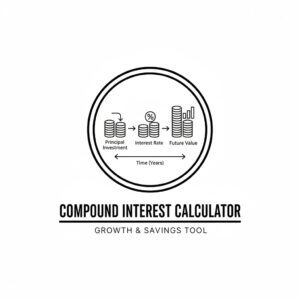
Compound interest is calculated using the formula:
FV = P × (1 + r/n)^(n×t)
Where:
-
FV= Future Value -
P= Principal Amount -
r= Annual Interest Rate (as a decimal) -
n= Number of compounding periods per year -
t= Time in years
Interest earned can be calculated as:
Interest = FV - P
The effective annual rate (EAR), showing the real return, is:
EAR = (1 + r/n)^n - 1
Frequent compounding results in faster growth. For example, monthly compounding yields slightly higher returns than annual compounding, assuming the same nominal rate. This is why professional advisors emphasize the value of early and consistent investing.
Benefits of Using a Compound Interest Calculator
A compound interest calculator offers several benefits for individuals and businesses alike:
-
Visualize Growth: See how investments or savings grow over time.
-
Plan for Goals: Determine how much to save to reach milestones like retirement or buying a home.
-
Compare Options: Evaluate different interest rates, compounding frequencies, and investment terms.
-
Forecast Returns: Project future income from various savings and investment accounts.
-
Track Progress: Monitor if you are on track to meet financial objectives.
A reliable interest on interest calculator is especially valuable for investors who want to understand the long-term impact of reinvesting earnings.
Real-Life Examples of Compound Interest
Consider a practical scenario:
-
Principal: $10,000
-
Annual Interest Rate: 6%
-
Compounding Frequency: Monthly
-
Duration: 15 years
Using a CI Calculator, the future value is:
FV = 10000 × (1 + 0.06/12)^(12×15)FV ≈ $24,296
This demonstrates that even moderate interest rates compounded regularly can more than double your money in just 15 years.
Expert investors often cite real-world case studies where disciplined savings combined with compound growth significantly outperformed one-time investments. For instance, a study by the Federal Reserve found that individuals who started saving early and consistently earned over 50% more by retirement age compared to those who delayed savings by a decade.
Using a Compound Growth Calculator Effectively
To maximize the benefits of a compound growth calculator, consider these tips:
-
Start Early: Even small amounts grow exponentially over time.
-
Increase Contributions: Regular contributions amplify compounding effects.
-
Monitor Rates: Look for accounts or investments with competitive interest rates.
-
Adjust Frequency: Monthly or daily compounding can outperform annual compounding.
-
Reinvest Earnings: Always reinvest dividends and interest to benefit from “interest on interest.”
Online calculators like this Compound Interest Rate Calculator provide instant projections and allow comparison between multiple scenarios.
Differences Between Simple and Compound Interest
Understanding the distinction between simple and compound interest is crucial:
-
Simple Interest: Calculated only on the principal. Formula:
SI = P × r × t -
Compound Interest: Calculated on principal + accumulated interest. Formula:
FV = P × (1 + r/n)^(n×t)
Over long periods, compound interest significantly outperforms simple interest. For example, a $5,000 investment at 5% annual simple interest for 20 years grows to $7,000, whereas the same amount compounded monthly grows to approximately $13,265.
Common Scenarios to Use a CI Calculator
A compound interest calculator is useful in various financial contexts:
-
Retirement Planning: Estimate nest egg growth over decades.
-
Education Savings: Project tuition fund growth for children.
-
Debt Management: Understand how compounding affects loans and credit card balances.
-
Investment Decisions: Compare bonds, mutual funds, and other interest-bearing assets.
-
Opportunity Cost Analysis: Use alongside an opportunity cost calculator to evaluate potential returns versus alternatives.
Using these calculators together ensures well-rounded financial planning.
Expert Tips for Maximizing Compound Interest
Financial advisors suggest strategies to harness compound growth efficiently:
-
Automate Contributions: Schedule monthly or quarterly deposits to maintain consistency.
-
Diversify Portfolio: Spread investments across assets with varying interest and risk profiles.
-
Monitor Inflation: Adjust expectations and choose accounts offering real returns above inflation.
-
Avoid Early Withdrawals: Premature withdrawals reduce compounding benefits.
-
Leverage Tax-Advantaged Accounts: Retirement and education accounts can protect earnings from taxes.
Experts emphasize that the earlier and more disciplined the savings, the greater the impact of compound interest.
How Technology Enhances Investment Growth
Modern tools like investment growth calculators and compound growth calculators have transformed personal finance. Benefits include:
-
Instant Calculations: Get projections in seconds without manual math.
-
Scenario Planning: Test multiple interest rates, durations, and contribution schedules.
-
Interactive Graphs: Visualize growth trends and compare strategies.
-
Accessibility: Available online or as apps for mobile-friendly, on-the-go use.
Using these calculators ensures you make data-driven financial decisions rather than relying on guesswork.
Practical Case Study
A small business owner, Sarah, invested $20,000 into a diversified portfolio with an average annual return of 7% compounded quarterly. She planned to reinvest earnings for 10 years. Using a CI Calculator, Sarah projected her investment would grow to:
FV = 20000 × (1 + 0.07/4)^(4×10)FV ≈ $40,097
By consistently contributing $500 monthly, the future value increased to over $100,000. This demonstrates the exponential effect of combining regular contributions with compound interest.
Tips for Choosing the Right Calculator
Not all calculators are created equal. Consider these factors when choosing a compound interest calculator:
-
Accuracy: Uses correct formulas and supports multiple compounding frequencies.
-
Flexibility: Allows input of principal, rate, time, and additional contributions.
-
Visual Output: Offers clear results with charts or tables.
-
User-Friendly: Simple interface for non-technical users.
-
Educational Value: Provides explanations and formulas for better understanding.
Check advanced online tools such as the Investment Planning Calculators to compare features.
FAQs
What is the best compounding frequency for investments?
Daily or monthly compounding generally yields slightly higher returns than annual compounding, assuming the same nominal rate. However, consistency and duration matter more than frequency.
Can I use a CI Calculator for loans?
Yes, a compound interest calculator can model loans, credit cards, and other debt where interest compounds, helping you understand total cost.
How does inflation affect compound interest?
Inflation reduces the real value of returns. While your nominal investment grows, the purchasing power may be lower. Choosing investments with returns exceeding inflation is key.
Conclusion
A Compound Interest Calculator is more than just a math tool; it is a strategic companion for anyone seeking to grow wealth, plan for the future, or make informed financial decisions. Leveraging the power of compounding, guided by accurate tools like interest on interest calculators and investment growth calculators, can dramatically change financial outcomes.
Practical applications, real-life case studies, and expert insights consistently show that early, consistent, and disciplined investment, combined with frequent compounding, delivers the highest potential returns. Tools like Compound Interest Rate Calculator and opportunity cost calculators can help make these strategies actionable. Harnessing compound interest effectively requires understanding, planning, and the right tools. Start today, calculate smartly, and let your money work for you.